Settling In
Brown's Hostel, where we moved in after arriving in Stromness, is a homely old house on the town's main street. The kid started school, and the welcome at Stromness Primary School has been incredibly warm. The teacher is learning Finnish with the help of AI and gives assignments in both Finnish and English. The kid was given her own tablet and a dedicated "class buddy" who helps with tasks and translation during lessons. The teacher has also installed a translation app on phone, and through the headphones my child was given, the translation comes whenever needed. I can only marvel at how endlessly kind and welcoming people are here. It's extraordinary that my child can go to school every morning excited and happy, even though she doesn't speak the language yet.
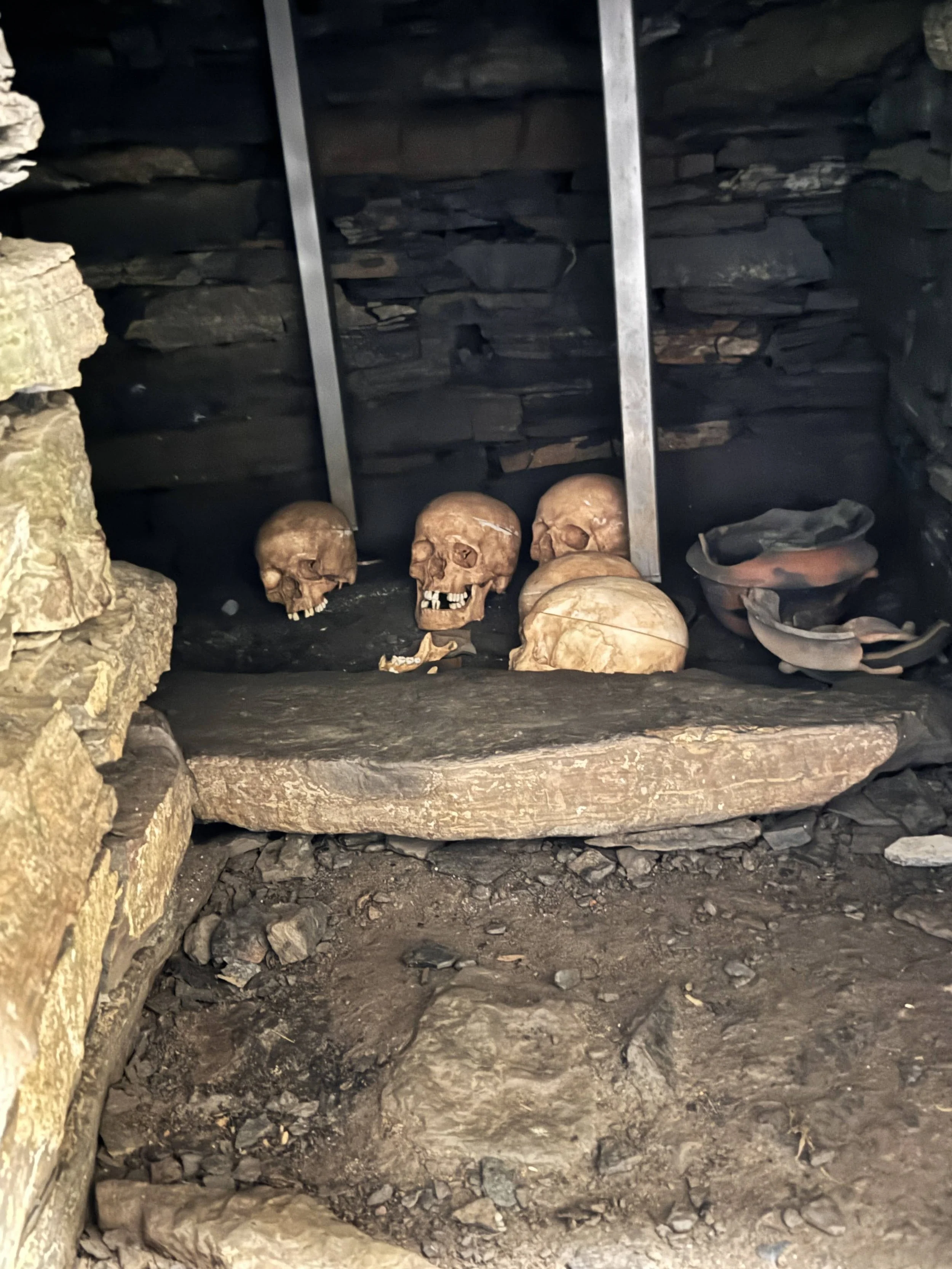
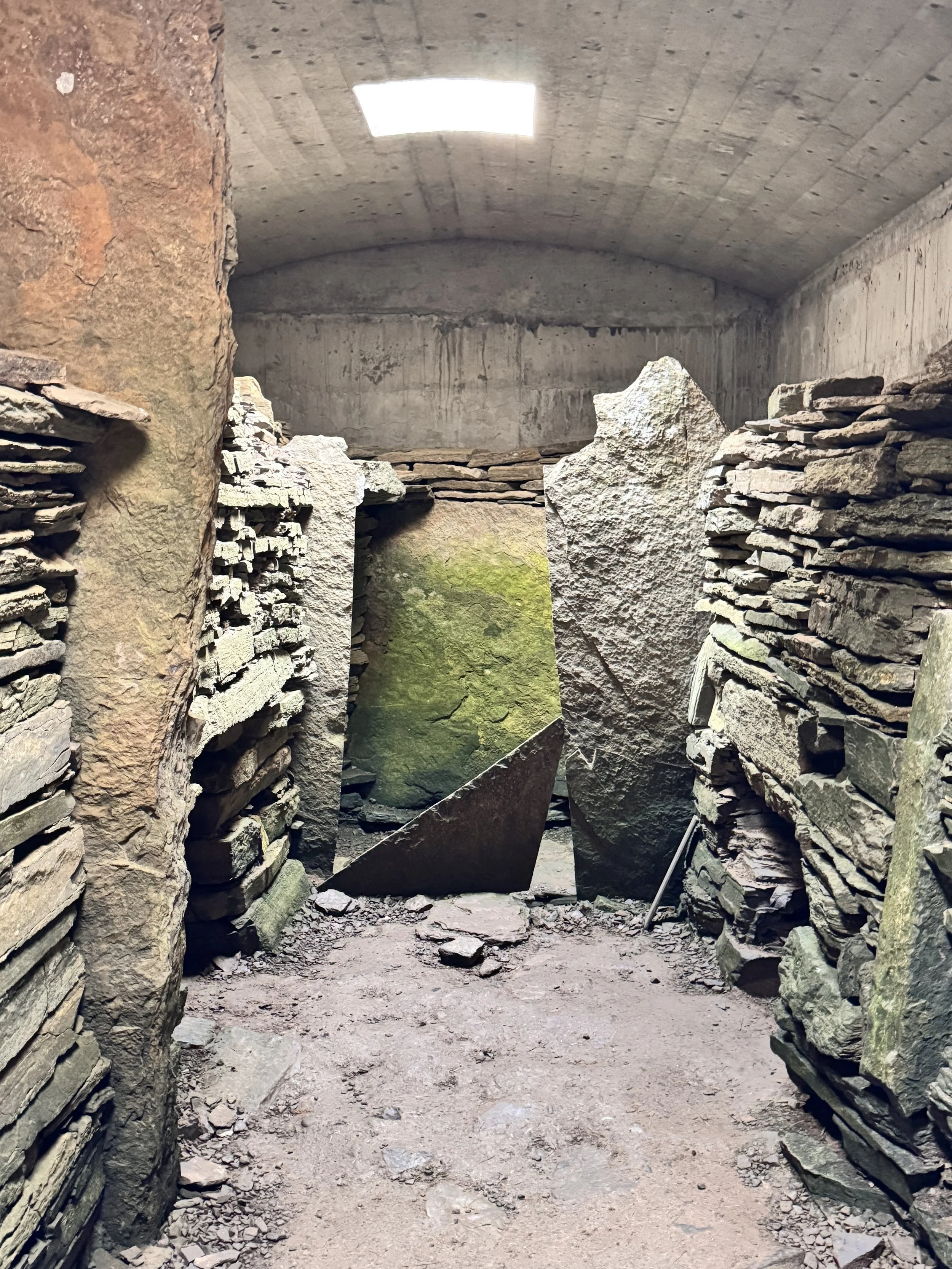
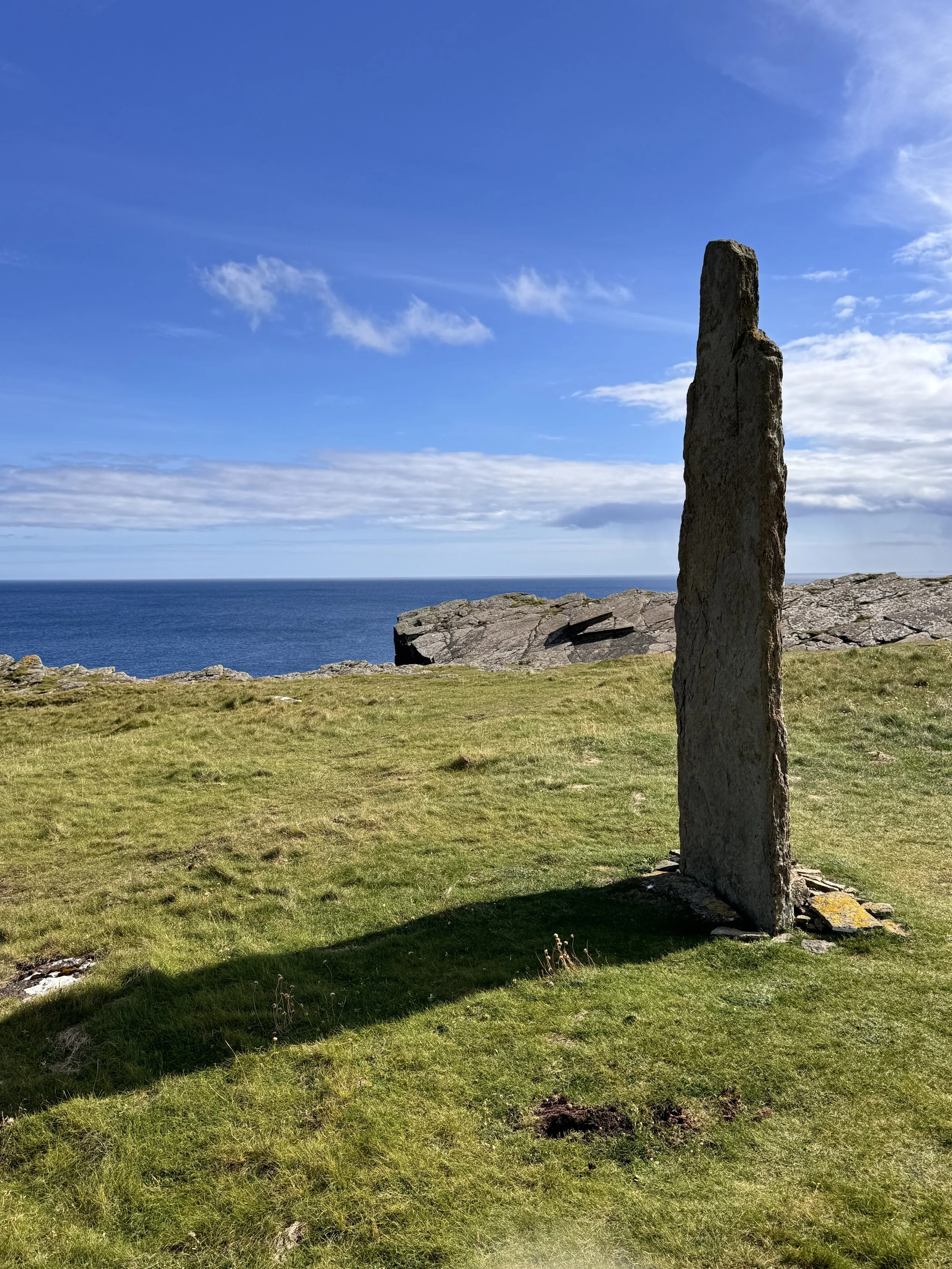
As for me, I'm easing into work now that settling in has begun. I got to visit my first archaeological site to photograph. The Isbister chambered cairn, better known as the Tomb of the Eagles, is a Neolithic burial chamber about 5,000 years old on the coast of South Ronaldsay. The site is best known for the bones and talons of sea eagles found there, along with an enormous quantity of human bone. Excavations have identified the remains of at least 338 people. So for generations, the dead were brought to this tomb, and sea eagles were brought to keep them company.
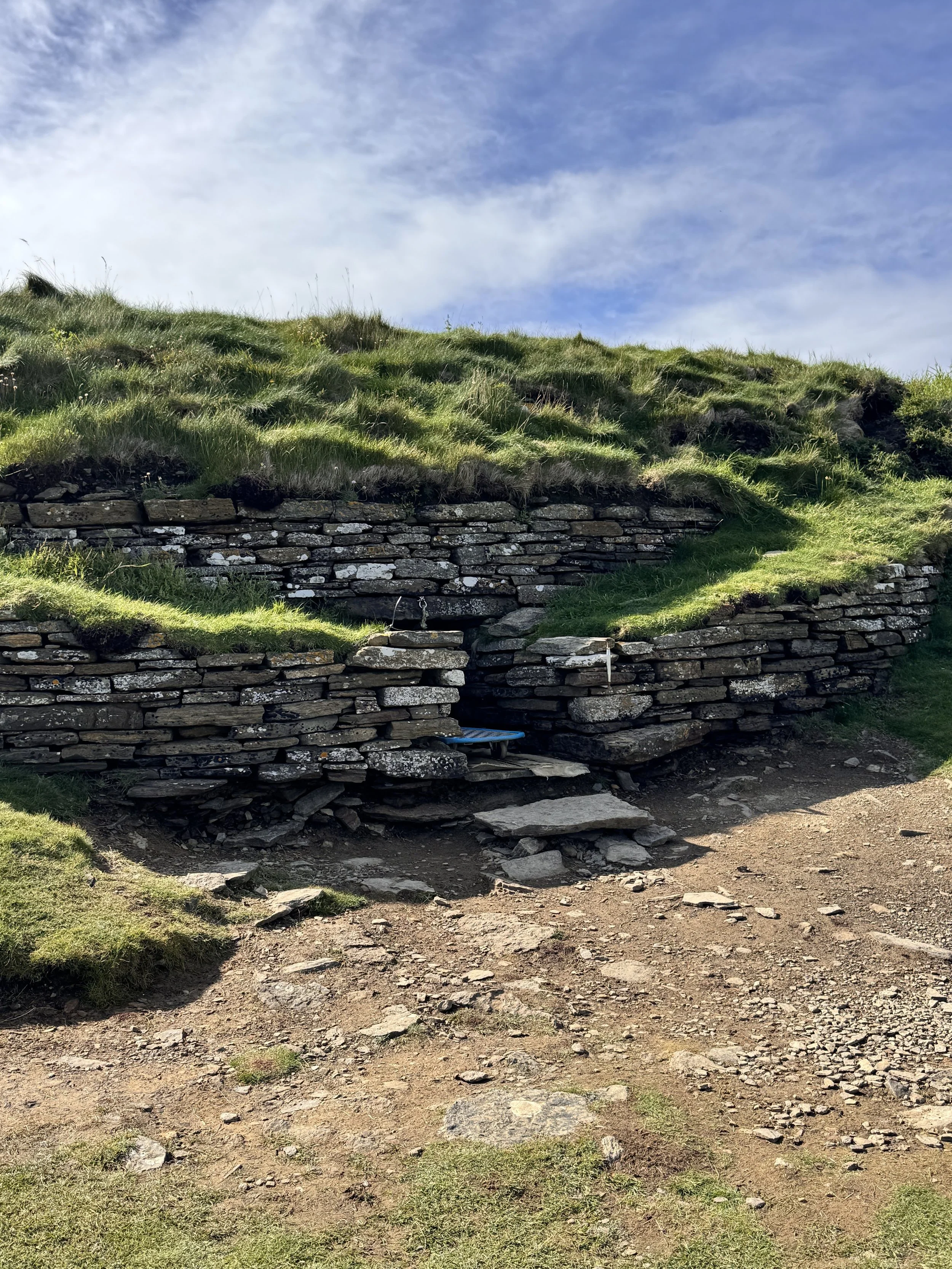
You leave your car at the visitor centre, which has an interesting little exhibition on the tomb and on a nearby Bronze Age dwelling. From there it's about a kilometre and a half (roughly a mile) to the tomb, along either a path running right above the sea cliffs or a slightly more inland route beside the pastures. The entrance faces the sea. You get inside on a funny little board with wheels fitted underneath – the kind mechanics always use, at least in the movies – and pull yourself along the passage by a rope on the ceiling.
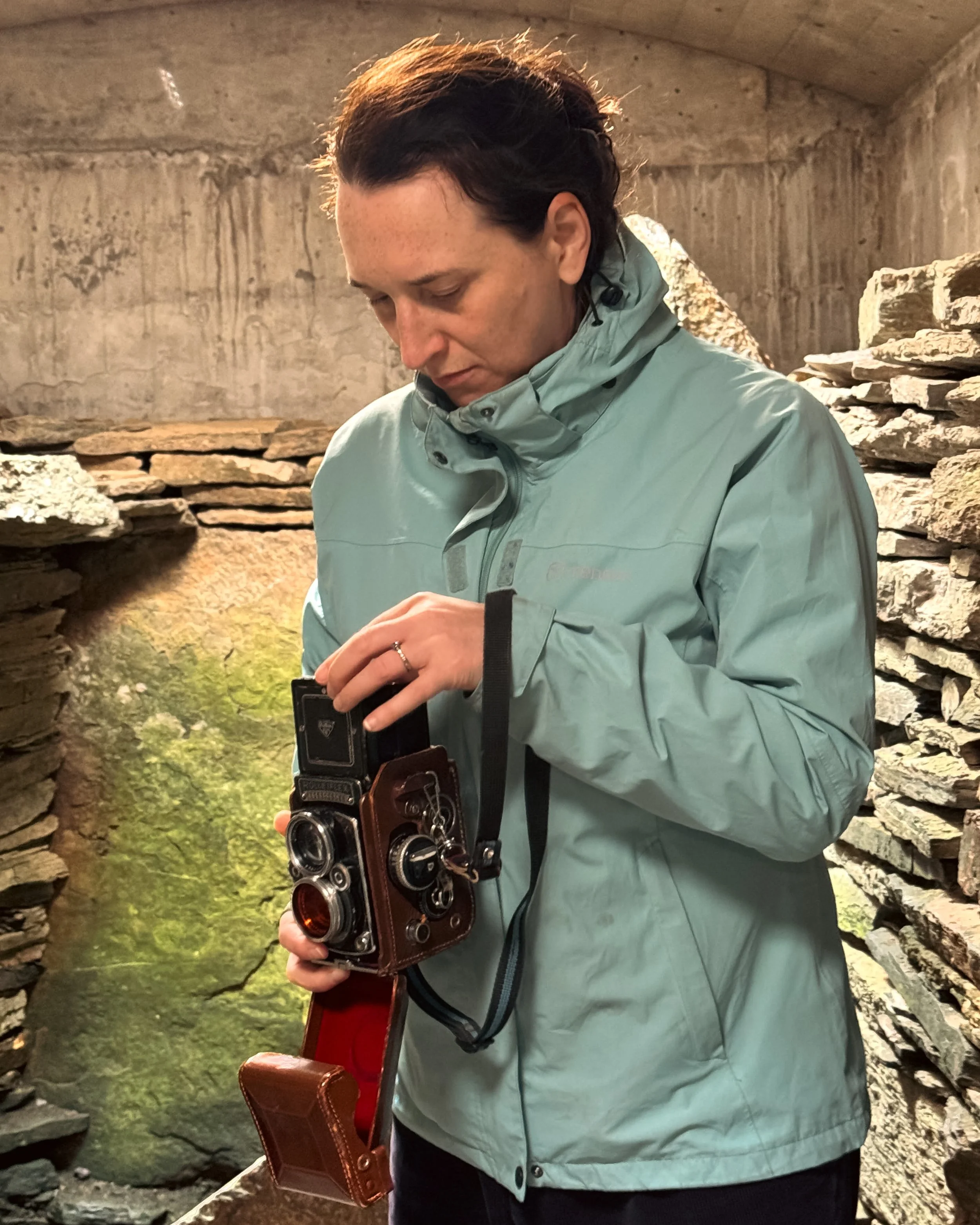
The tomb itself isn't dark, since its roof has been supported and rebuilt in concrete and fitted with skylights. Otherwise the interior is original, with wide stone slabs supporting the ancient dry-stone walls. Green moss covers some of the stones, and from the dark recesses of the chamber a few skulls glow, marking the spots where bones were found. Apparently, a special feature of the tomb is that around Beltane, at the end of April, the sun shines straight in along the narrow entrance passage. It's a similar feature to the famous Maeshowe, where the sun enters the tomb at the winter solstice instead.
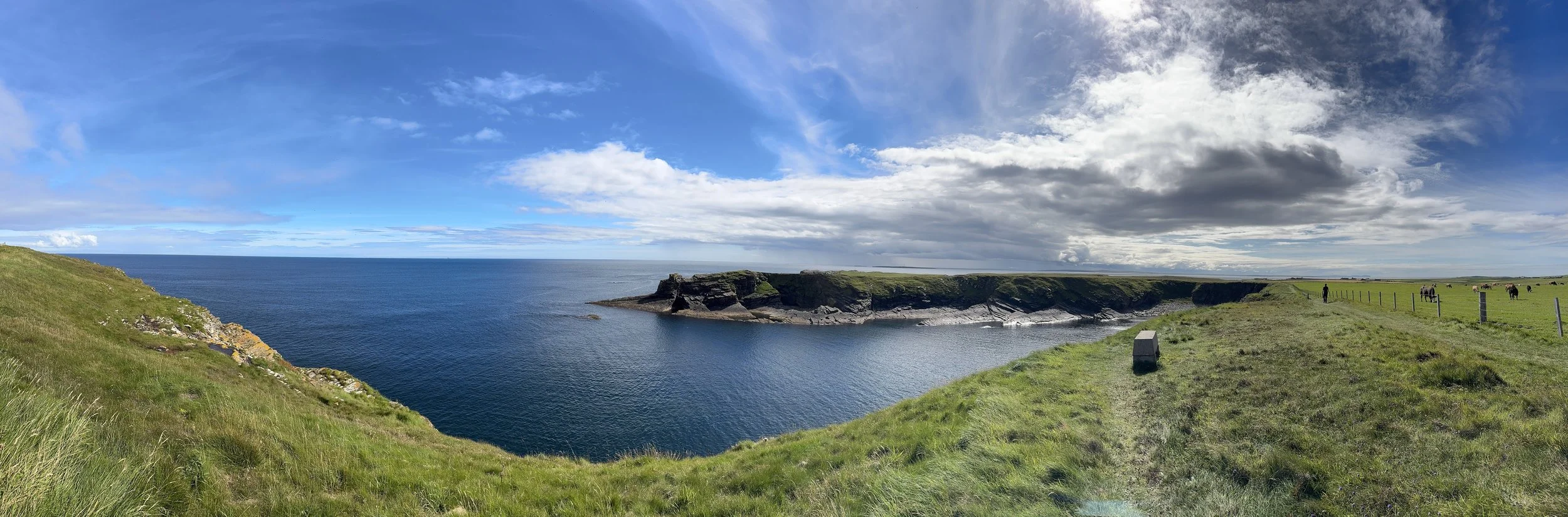
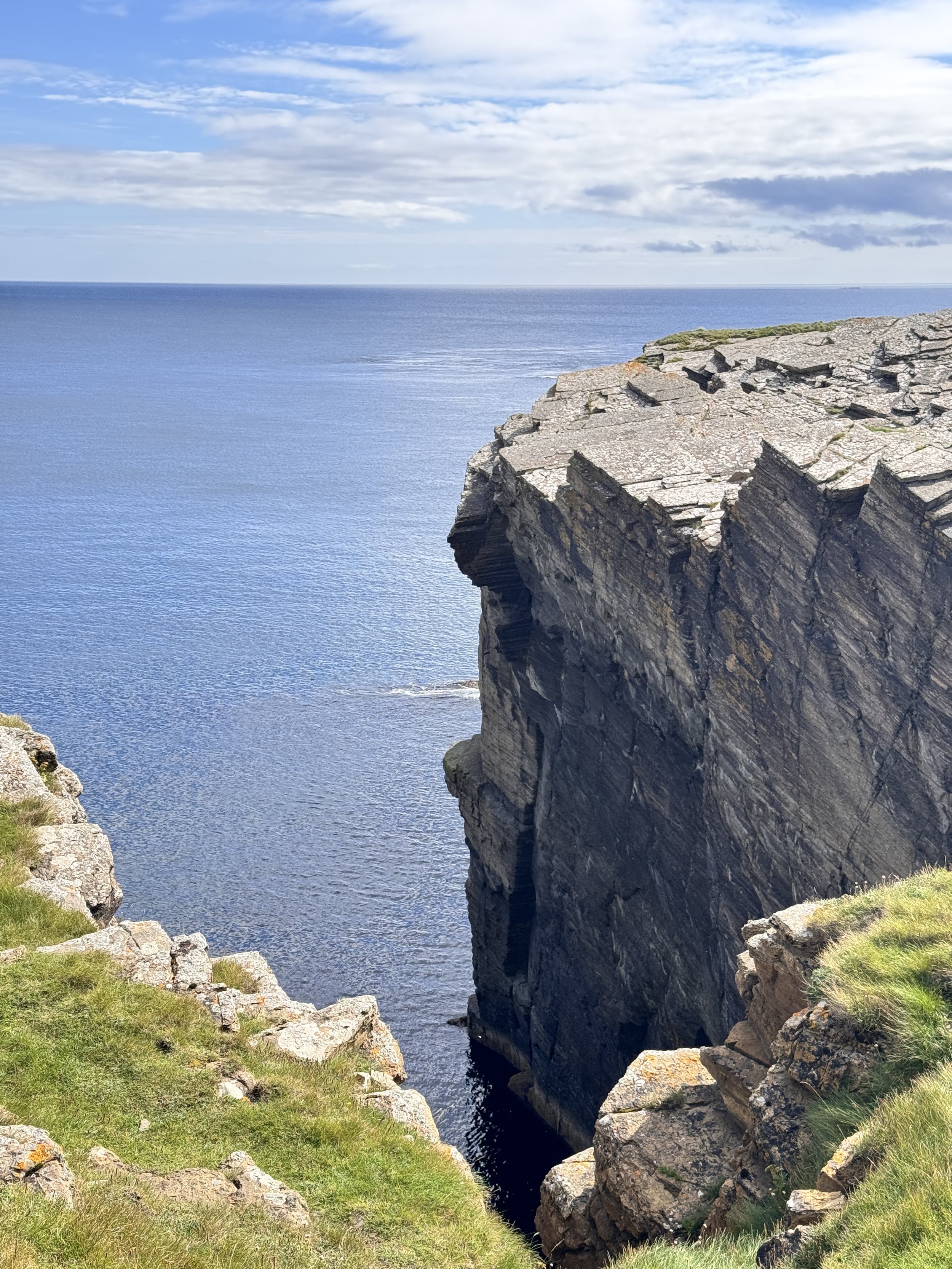
The Tomb of the Eagles and the landscape around it belong together inseparably. Its position high on a steep cliff right by the sea, with the entrance opening toward the water, was clearly chosen with great care. It was strange to stand in front of the tomb and reflect that the bones of the landscape around me are the same as when people brought their dead here, and sea eagles with them. Of course, the landscape isn't truly the same – people have changed the environment in many ways – but it is so vast and the cliffs so high that human activity seems little more than a scratch on the surface.
Photographing at the tomb and around it felt somehow like fumbling in the dark. I looked at the light, the surface of the stone, the grass and the sea, and tried not to decide in advance what the picture should look like. It's hard to look at a landscape without deliberating, because the eye instinctively goes searching for the best possible composition. Still, I'm trying to approach it a little differently: to give the landscape room to find its own form, and to let it affect me on its own terms.