Scapa Flow: SMS Karlsruhe
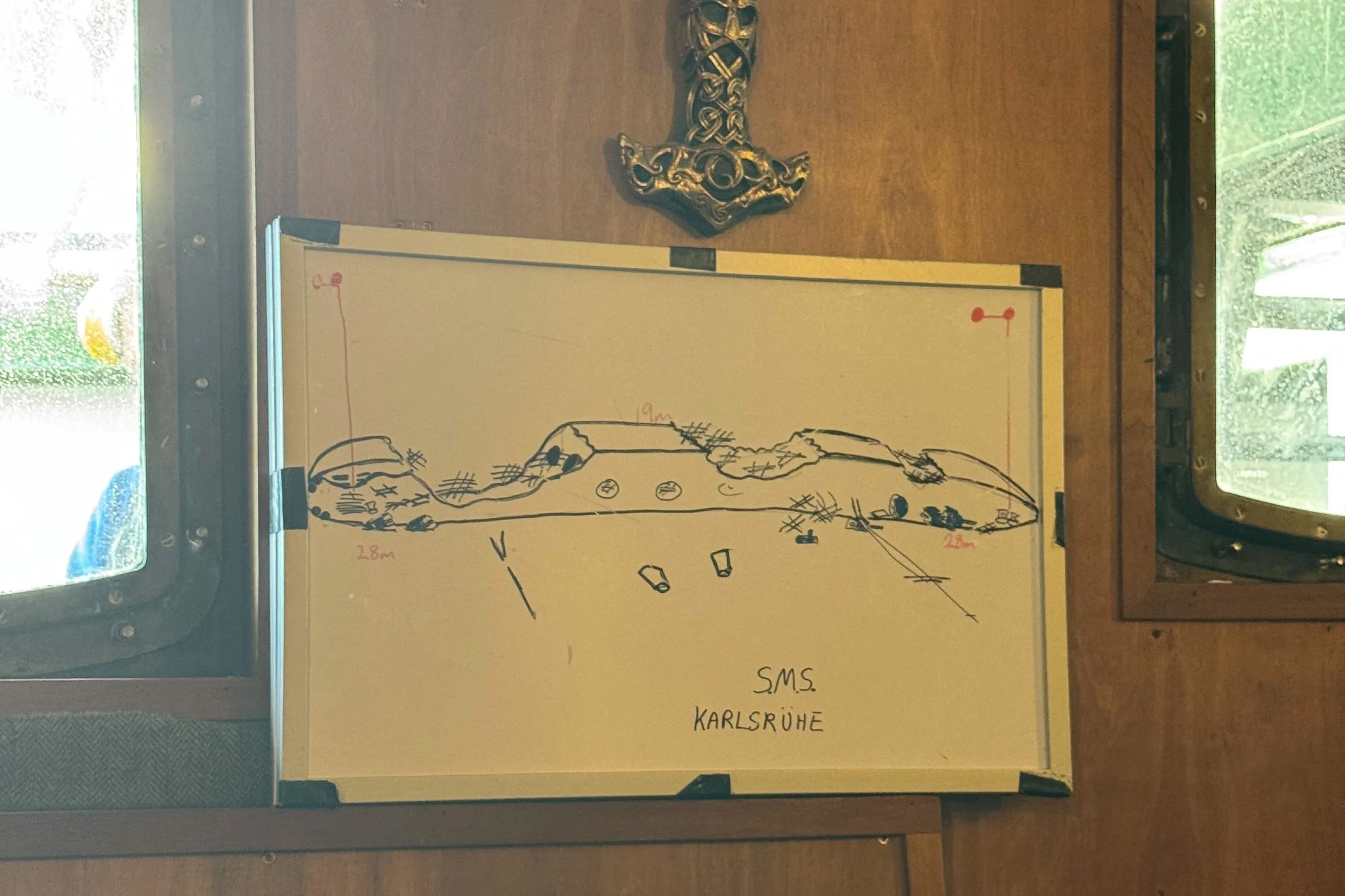
Hazel’s drawing of SMS Karlsruhe’s profile.
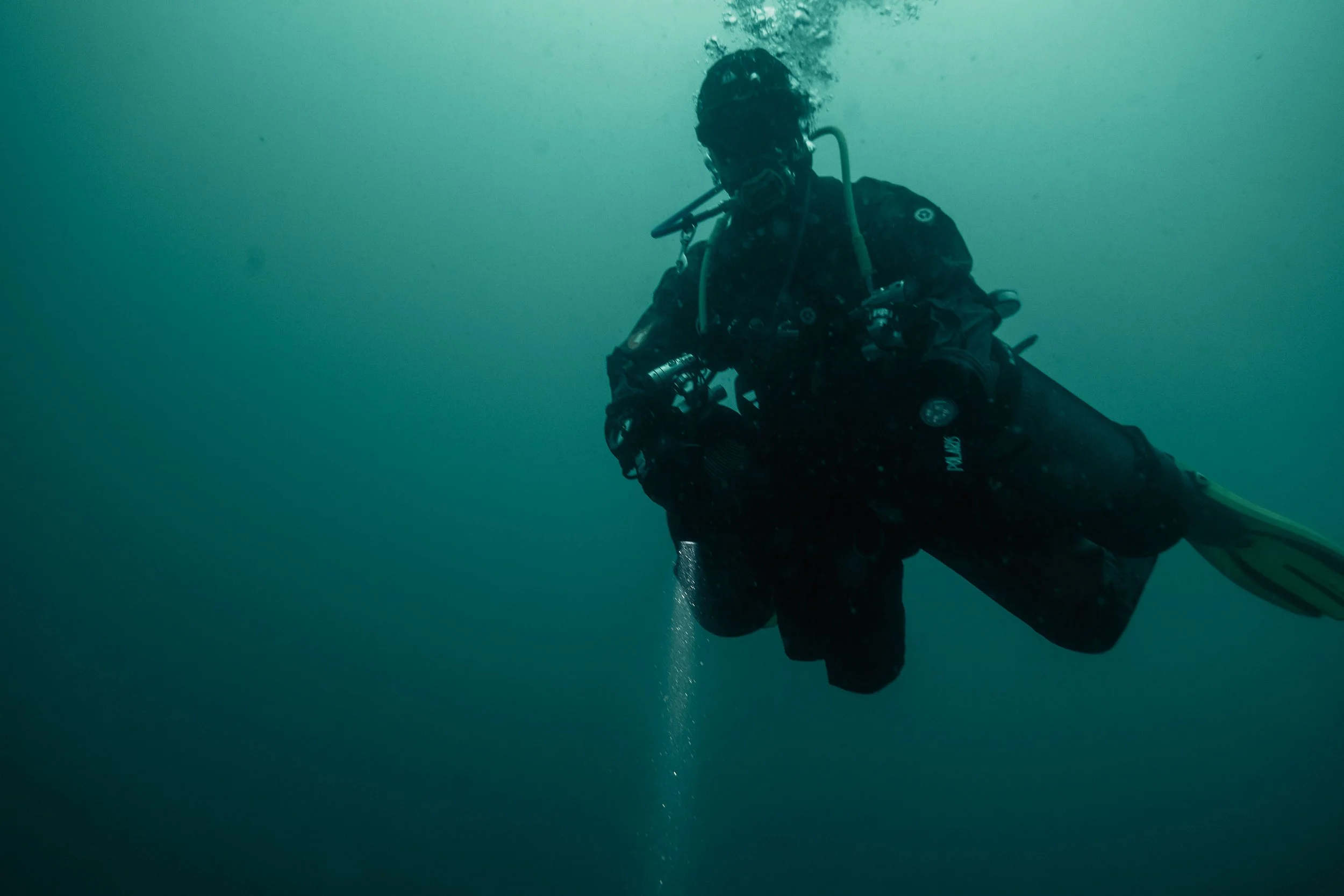
At the end of September, I finally got out onto the sea properly to marvel at the German fleet in earnest. We set off in the morning with Kraken Diving aboard the MV Valhalla, skippered by the brilliant Hazel Weaver, who has more than 25 years of experience commanding various vessels. She and the crew are highly prominent in the technical diving community and frequently lead expeditions to explore historic World War I and II wrecks. This time we got to join almost as a special addition, as the boat was otherwise booked by a Czech liveaboard group.
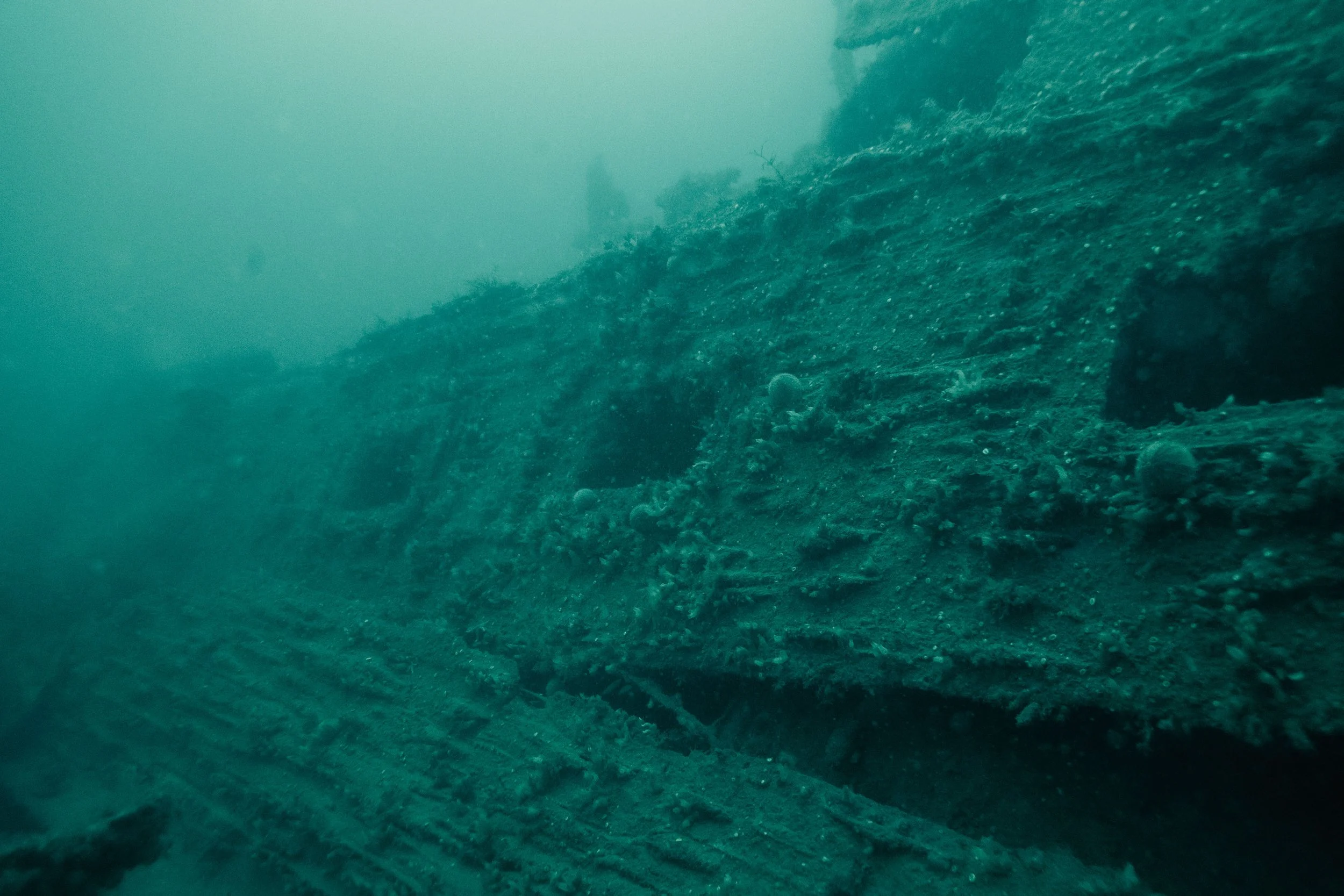
Karlsruhe’s side.
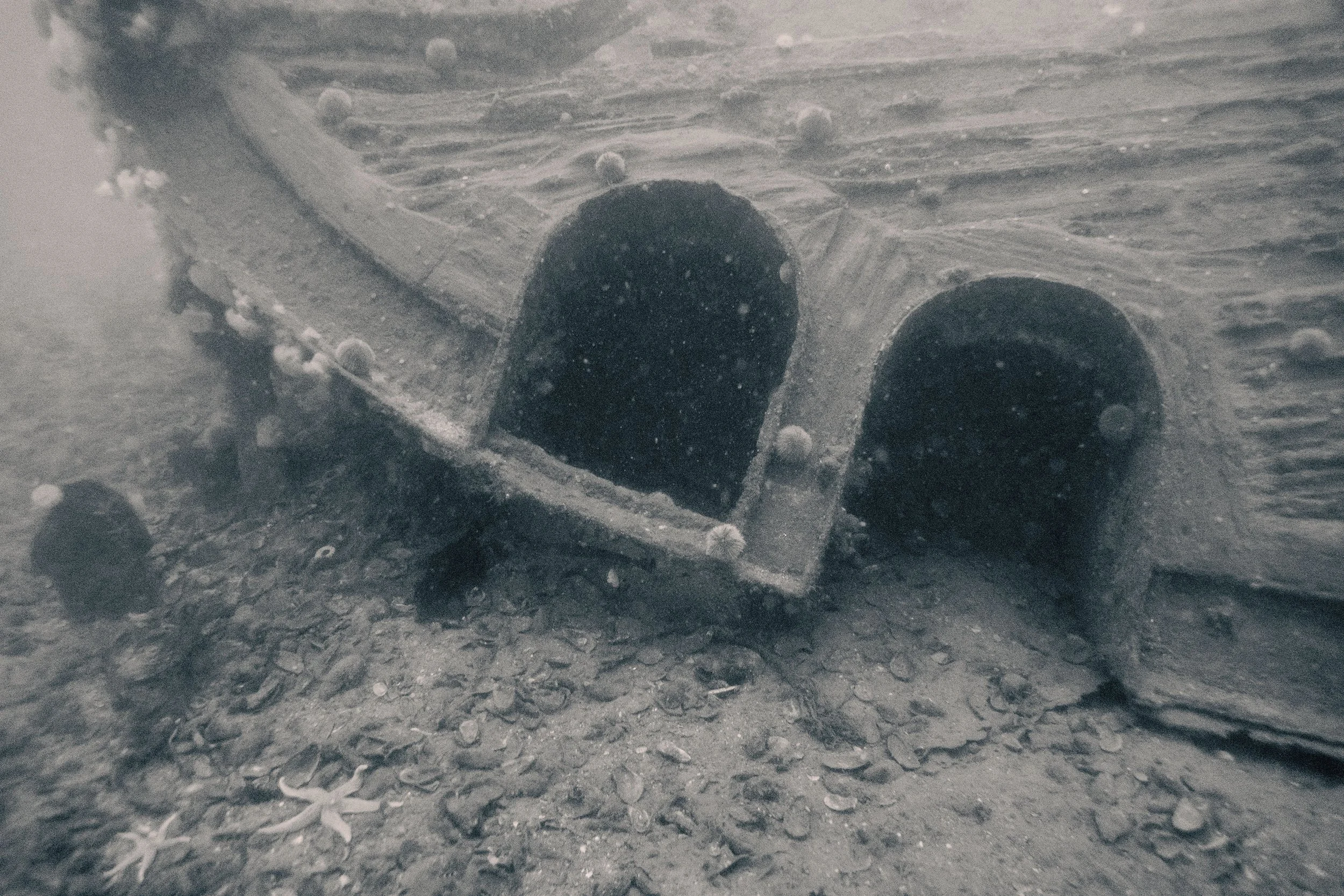
Hazel has an enormous knowledge of history, and we got to hear truly fascinating presentations on the history of the wrecks we were diving. The first was the SMS Karlsruhe, a Königsberg-class light cruiser. Compared to the later Cöln-class light cruisers, the Karlsruhe's control tower is positioned forward of the bridge, and she is the only light cruiser in Scapa with submerged torpedo tubes. More information on the wreck can be found here.
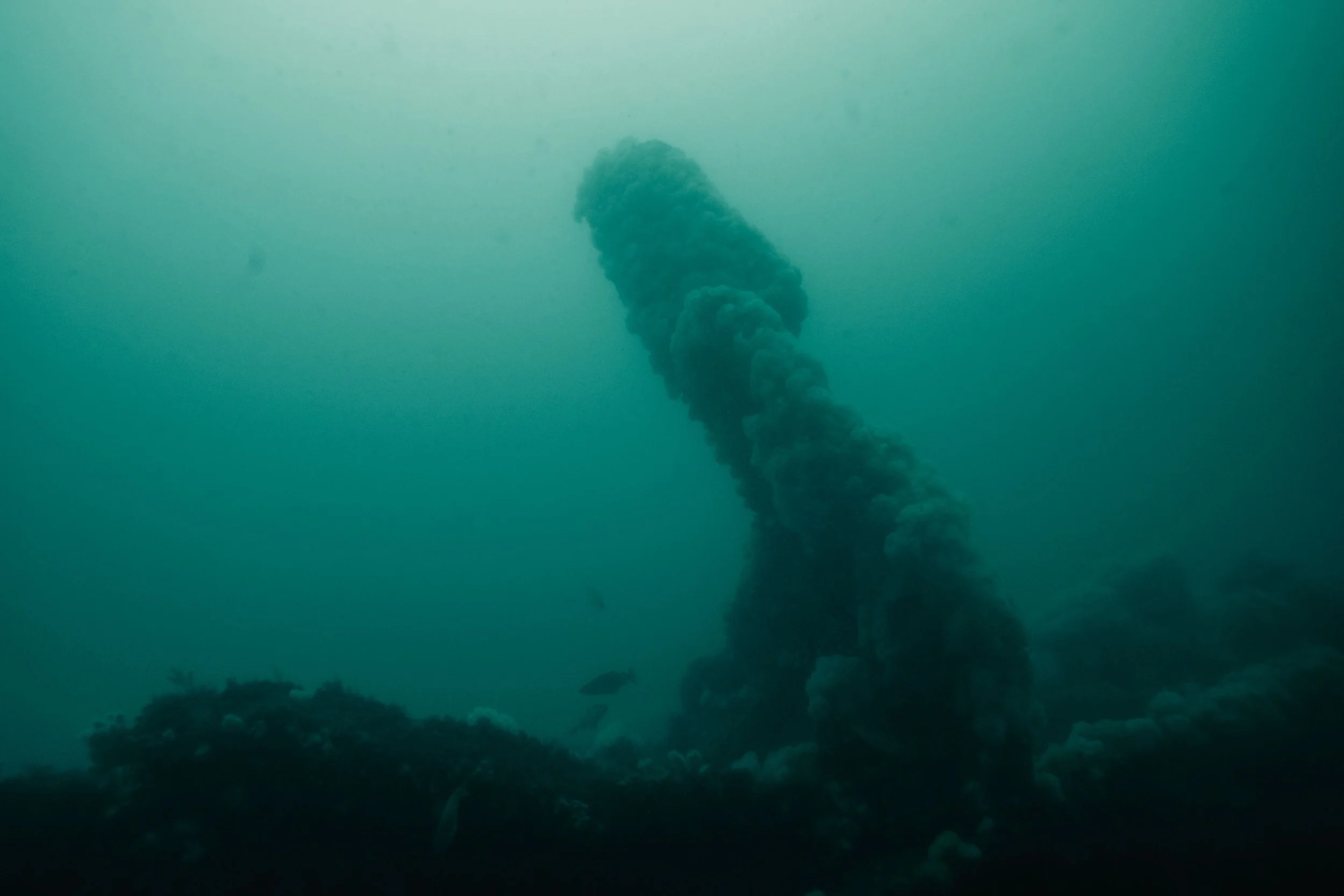
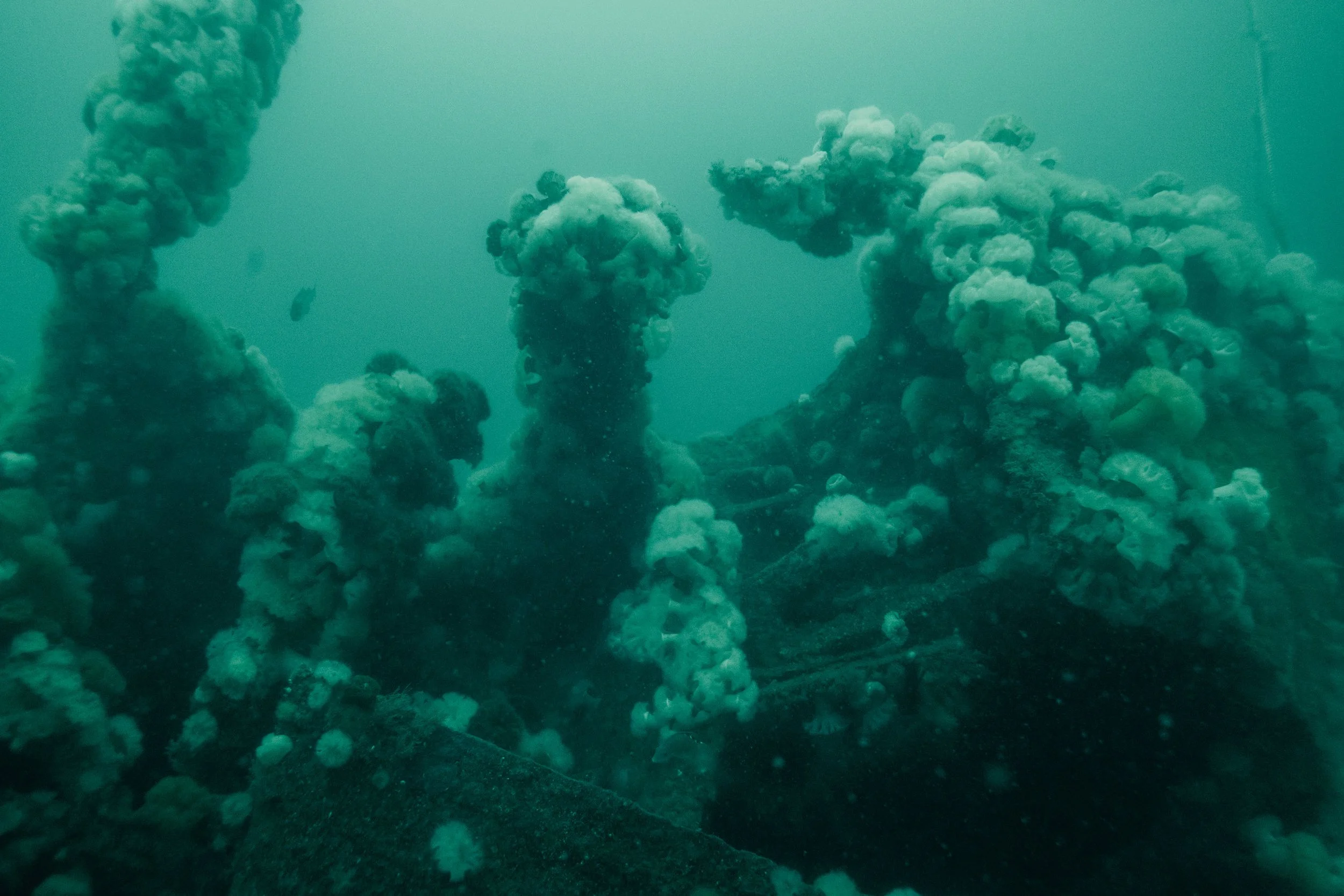
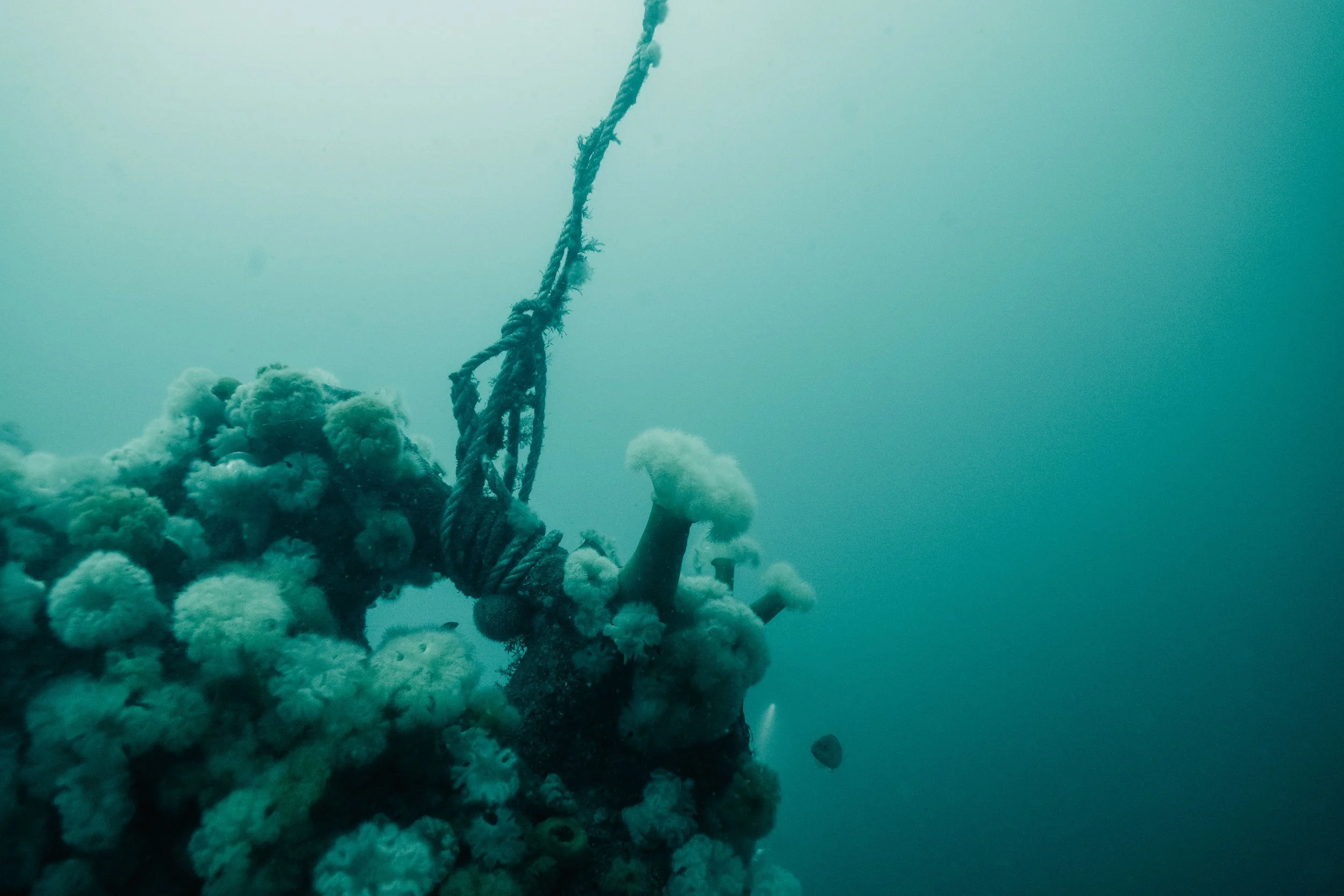
The Karlsruhe rests on her starboard side in about 25 metres of water, with the shallowest part of the hull around 14 metres. Visible features include the bow anchors, capstans, collapsed guns, a detached control tower, engine compartments with exposed pipes and coal piles, and the rudder. The wreck is protected as a scheduled monument. The common assumption that wrecks become less interesting as they deteriorate does not hold true for the Karlsruhe. The ship's large mechanical components are easy to see and fascinating to explore.
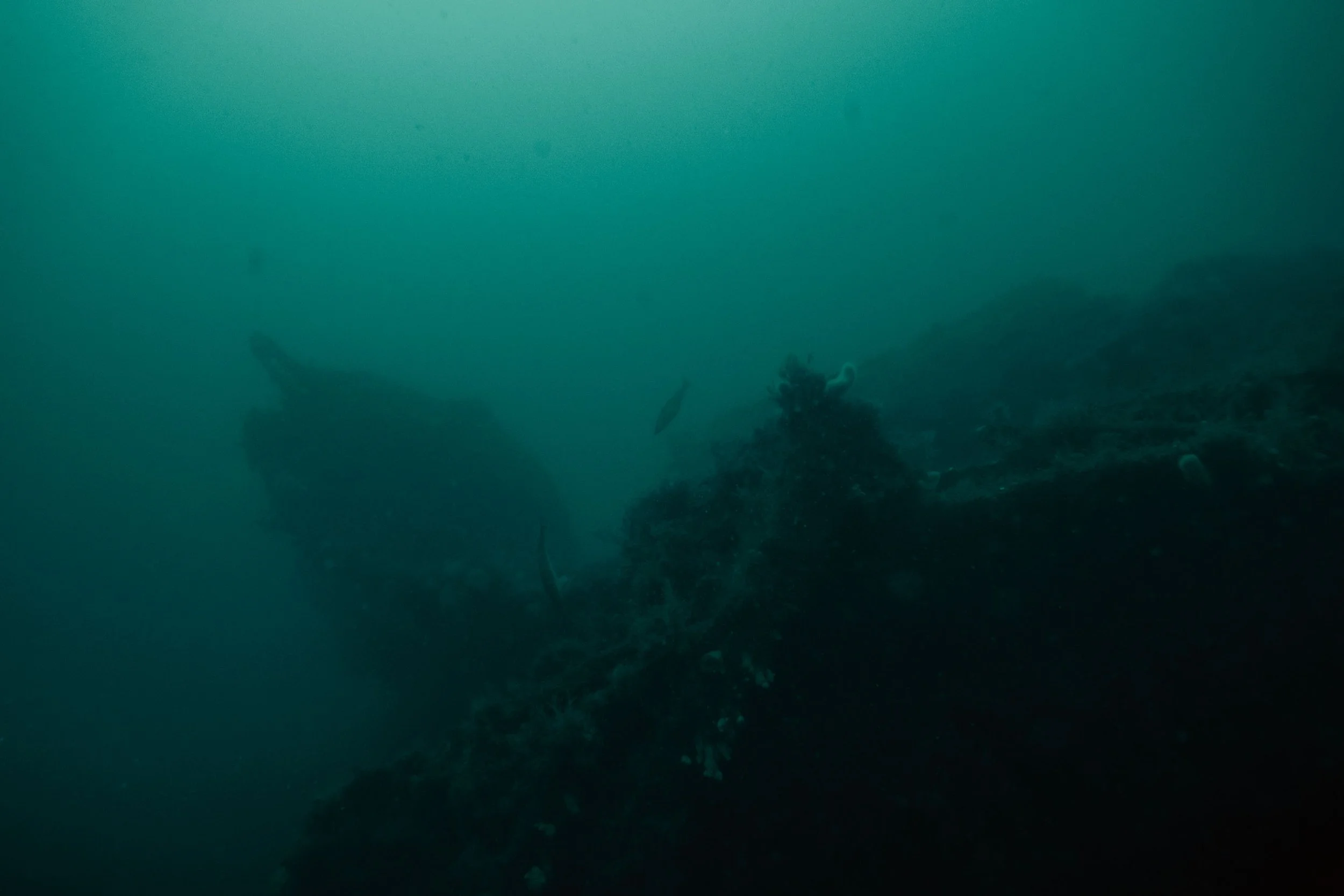
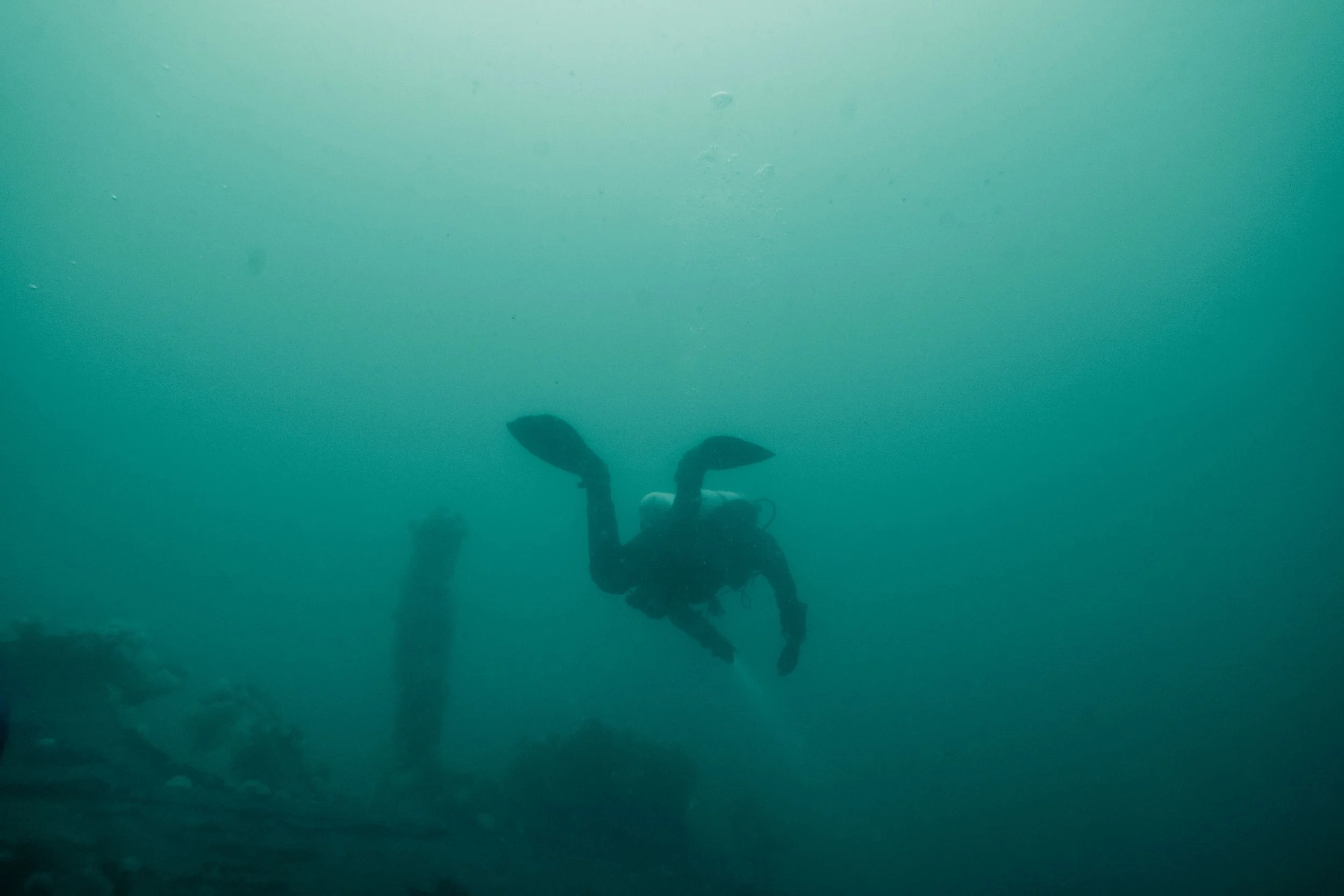
I was astonished by the sheer amount of life there: fish of every size, large schools of smaller ones and numerous bigger fish circling above and around the wreck. Exactly which species they were stayed a little unclear to me, though at least some were cod. We began our circuit at the bow and moved slowly along, examining the boilers left on the seabed, the gears, valves and the control tower. Because the ship was extensively demolished and salvaged with explosives in the 1960s, her boiler rooms have been torn open, and boilers and their boiler tubes lie exposed on the bottom. Forward of the boilers, a large metal cylinder lies completely detached from the hull on the seabed, the control tower, its walls ten centimetres of solid steel. Right beside it was a cone-shaped piece of a compass binnacle, half-buried in sand. Continuing toward the stern, we found an engine room ravaged by the demolition work, where huge sections of steam turbines, gears and heavy valves now lie. The salvage work cut this part of the wreck in half, leaving large, shapeless piles of metal on the seabed.
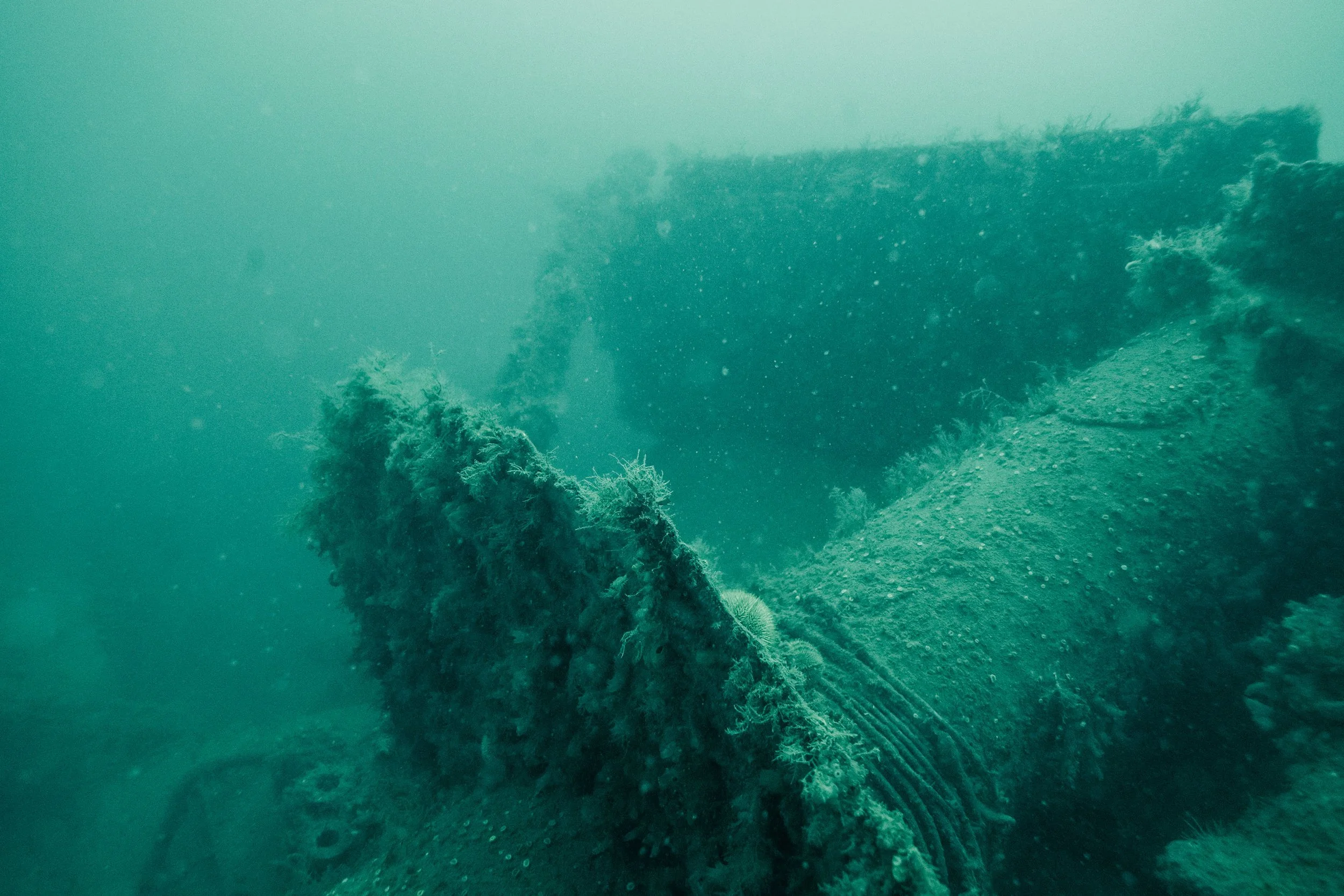
Visibility was, I thought, quite good, maybe around ten metres, though compared to the Baltic Sea, anything over three metres already counts as good visibility. I have dived in conditions so murky that I couldn't see my own hand in front of me. In winter, I'm told, visibility here can be truly spectacular, to the point where you can see the whole wreck from the surface, so I guess around 25 metres. We moved slowly over to the port side of the wreck toward the stern and stopped to admire a large lobster living inside a ventilation duct. It grew curious about our lights and came out to peer at us, waving its claws.
It was wonderful to dive a wreck again after so many years. For me, shipwrecks have an absolutely magical atmosphere. I've been fascinated by them since childhood. One of my favourite Tintin books was Red Rackham's Treasure, in which the treasure ship is searched for both in a diving suit and in the shark-shaped submarine built by Professor Calculus. I can still recite parts of the story by heart (although only in Finnish): "Sit’ loppui meiltä vesi sillä ilma oli kuuma, mut viinitynnyreitä täynnä oli koko prikin ruuma..." The story's most striking image is a drawing of the half-decayed Unicorn lying on the seabed, with Tintin walking toward it in his diving suit. Now that I've had the chance to see many wrecks up close, the magic hasn't faded, if anything the opposite.
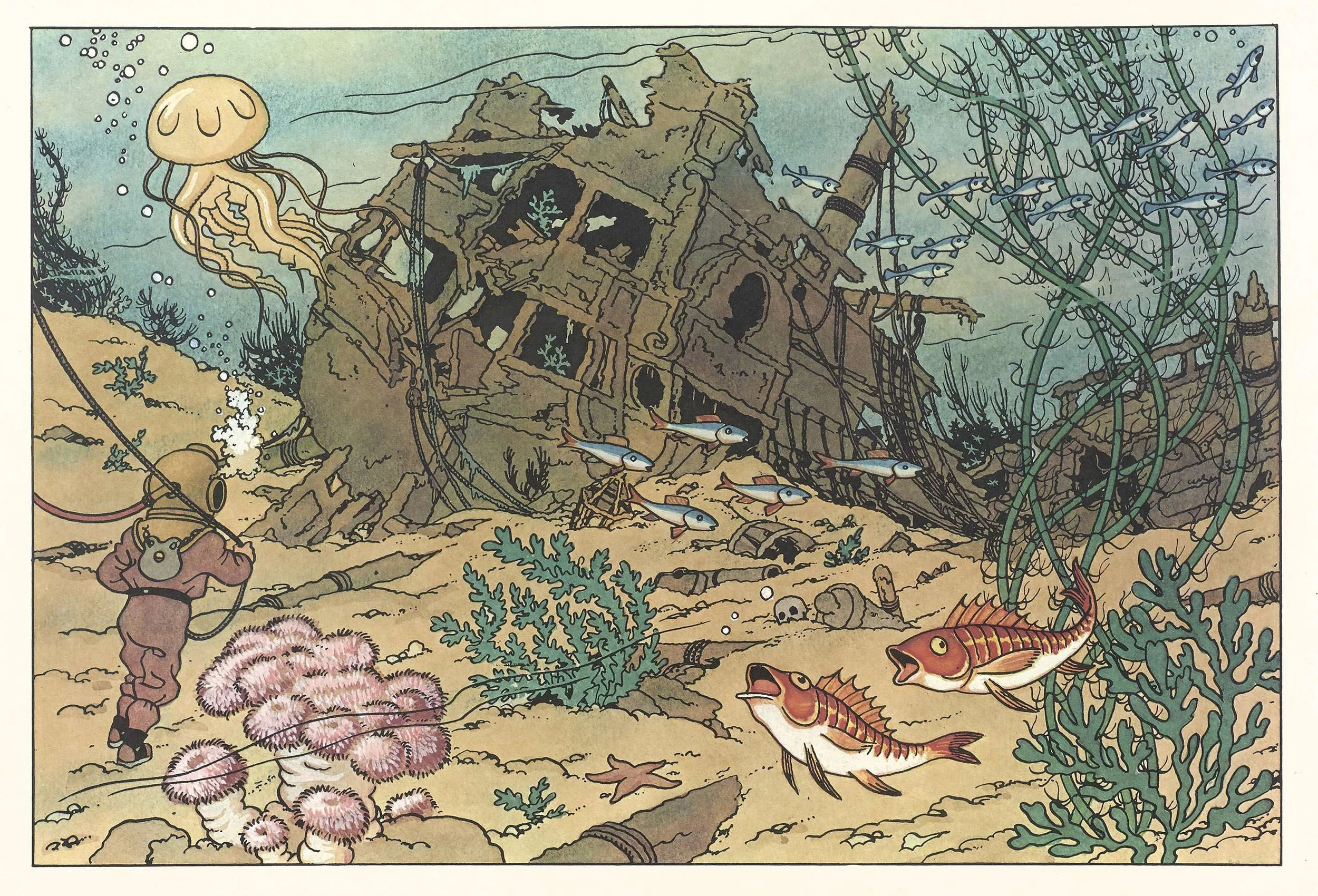
Tintin heading toward the sunken Unicorn. Hergé , 1943. Paris: Le Soir.
A sunken ship is, in an interesting way, a frozen fragment of history, like the insect preserved in amber that Bazin referred to when writing about photography, only more captivating to me. In wrecks, time seems to have stopped at the moment they went down, and even though they have changed and broken apart on the seabed since, some deep otherness, or out-of-timeness, holds them in its grip. They are perhaps the most perfect examples of apochrony, something that rests firmly outside any recognisable timeline. At the same time, they condense tragic and fascinating moments of history, and stand as a kind of continuous reminder of the power of the sea, and of the fact that we have to acknowledge its own laws and its ungovernability. I find that healthy, and in these times of accelerating climate change, understanding it feels more important than ever.
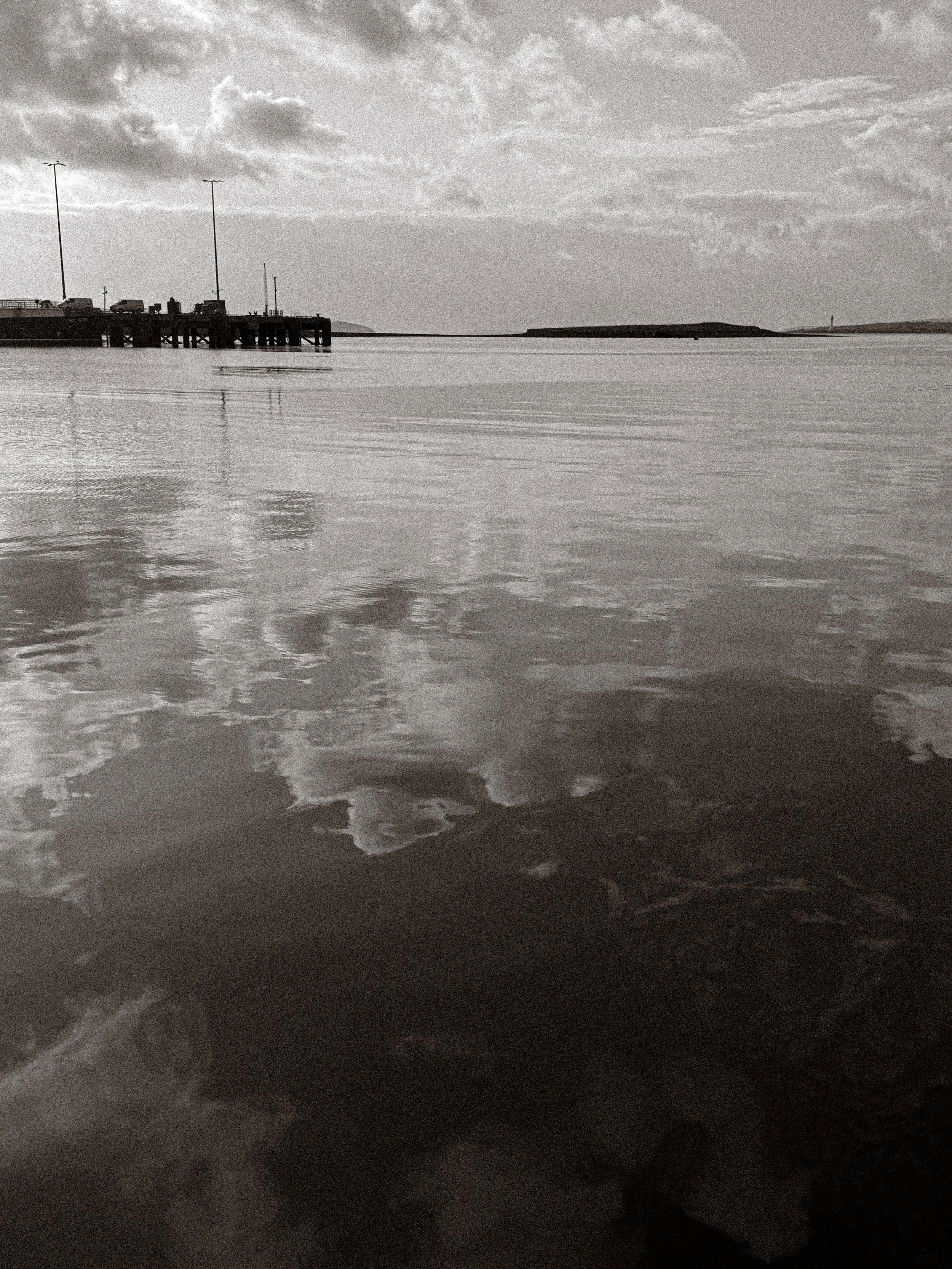
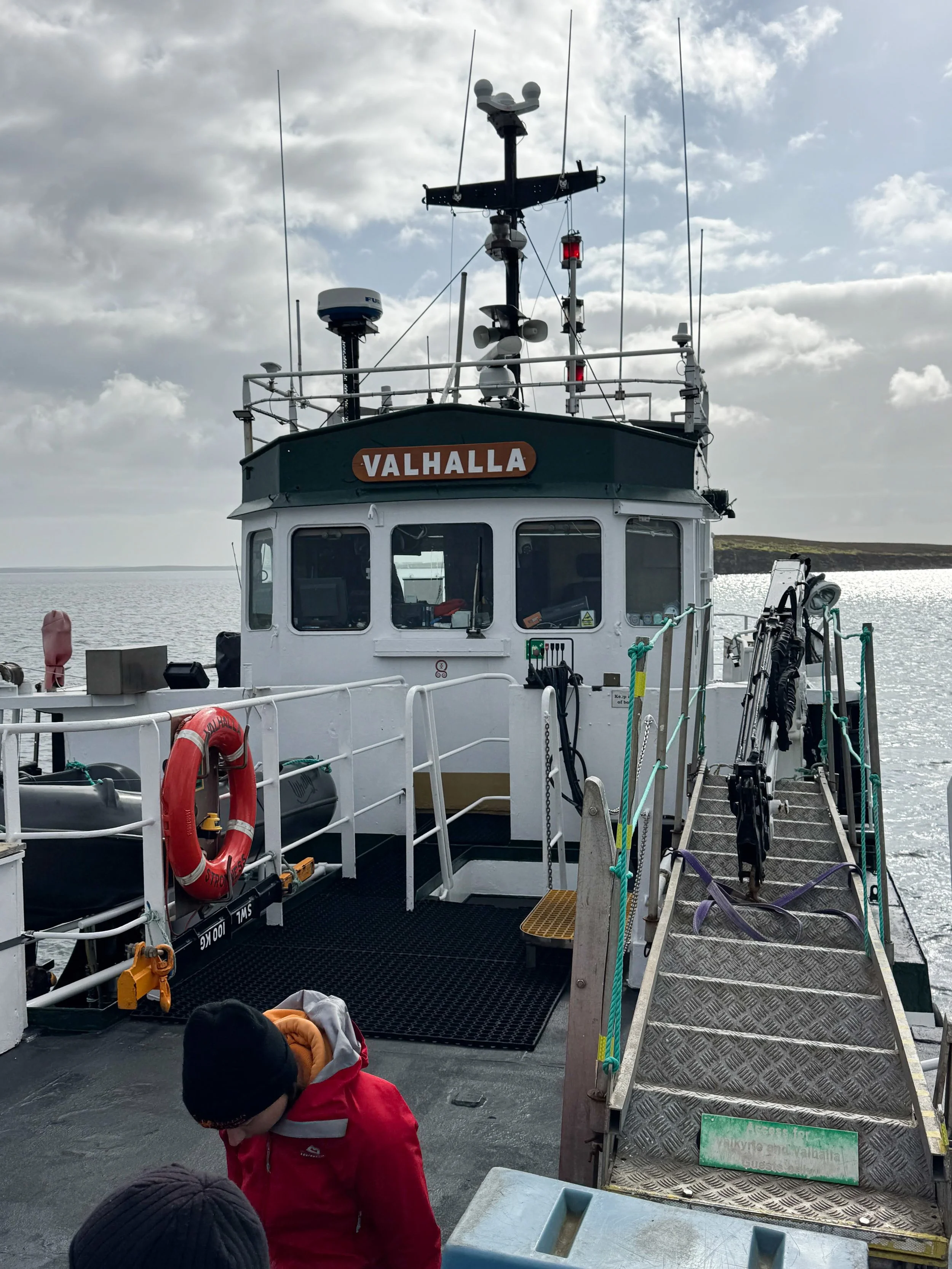
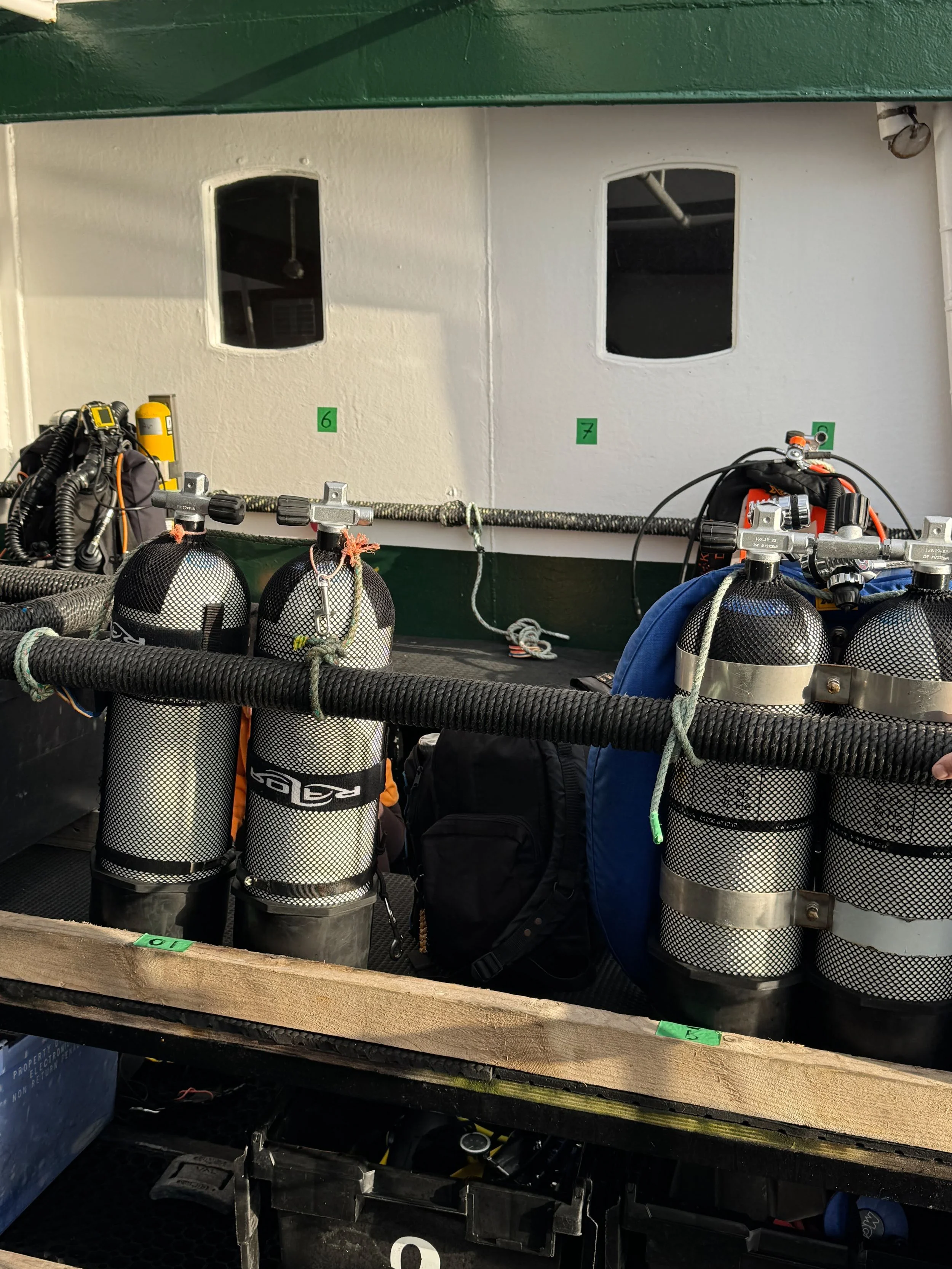
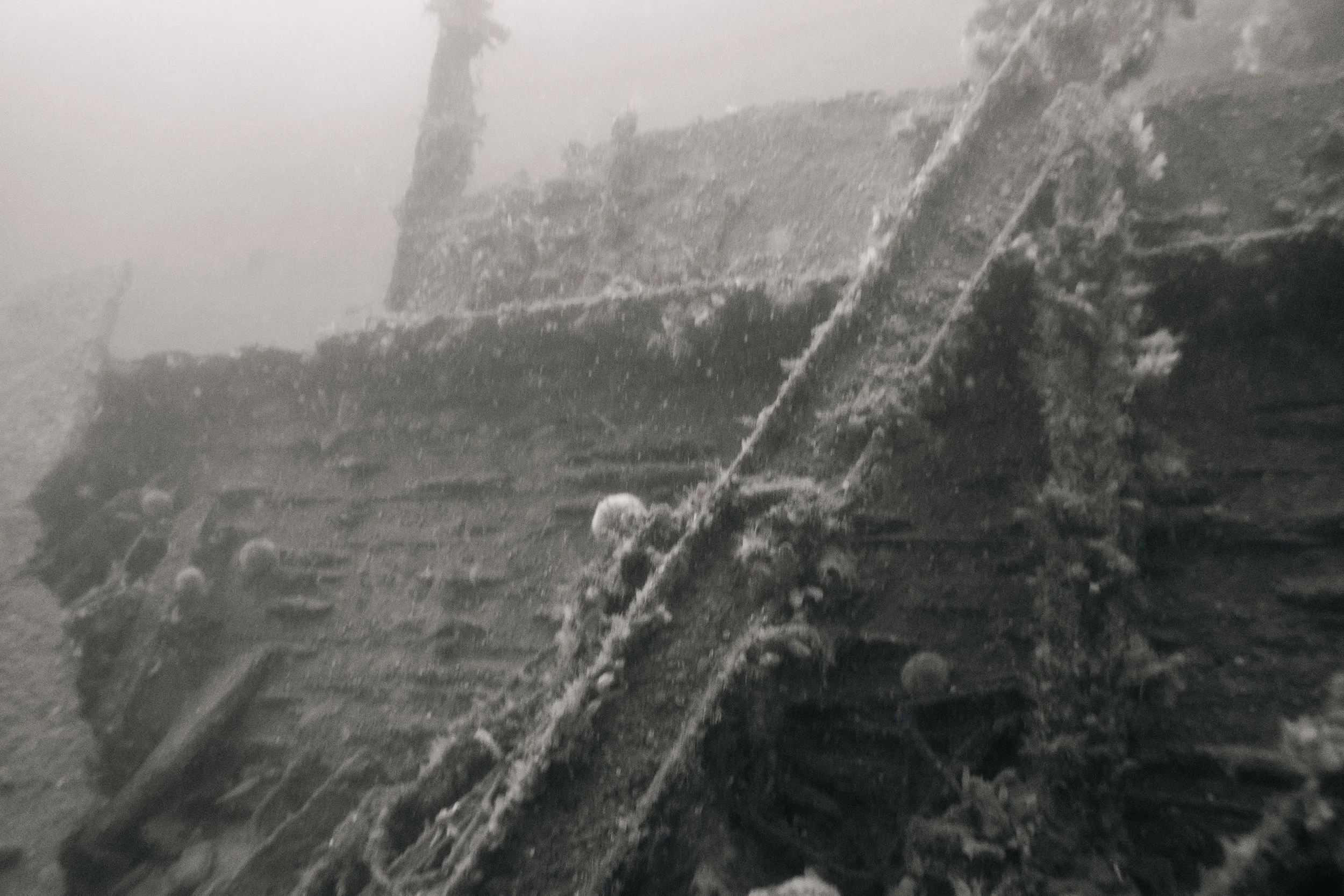
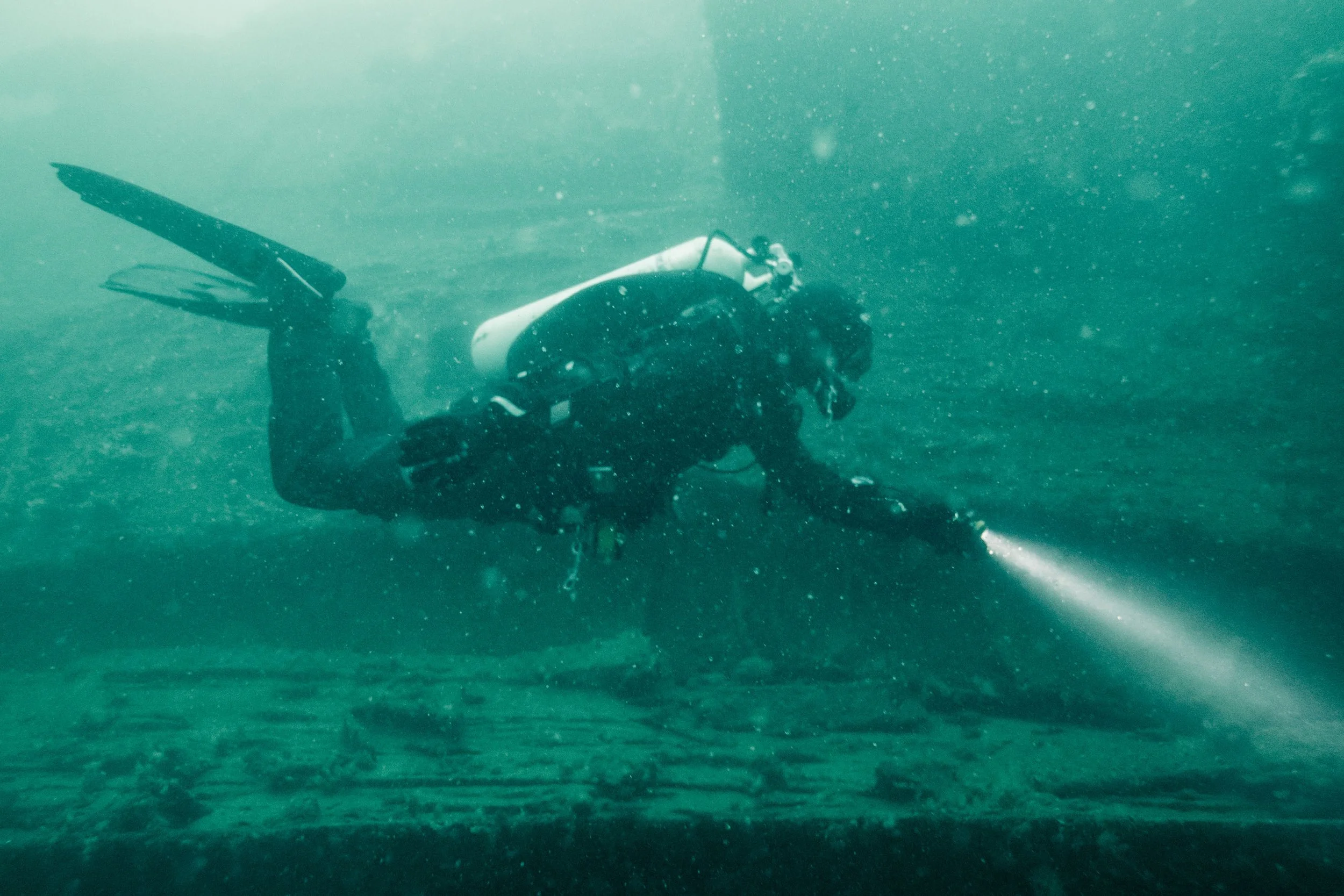
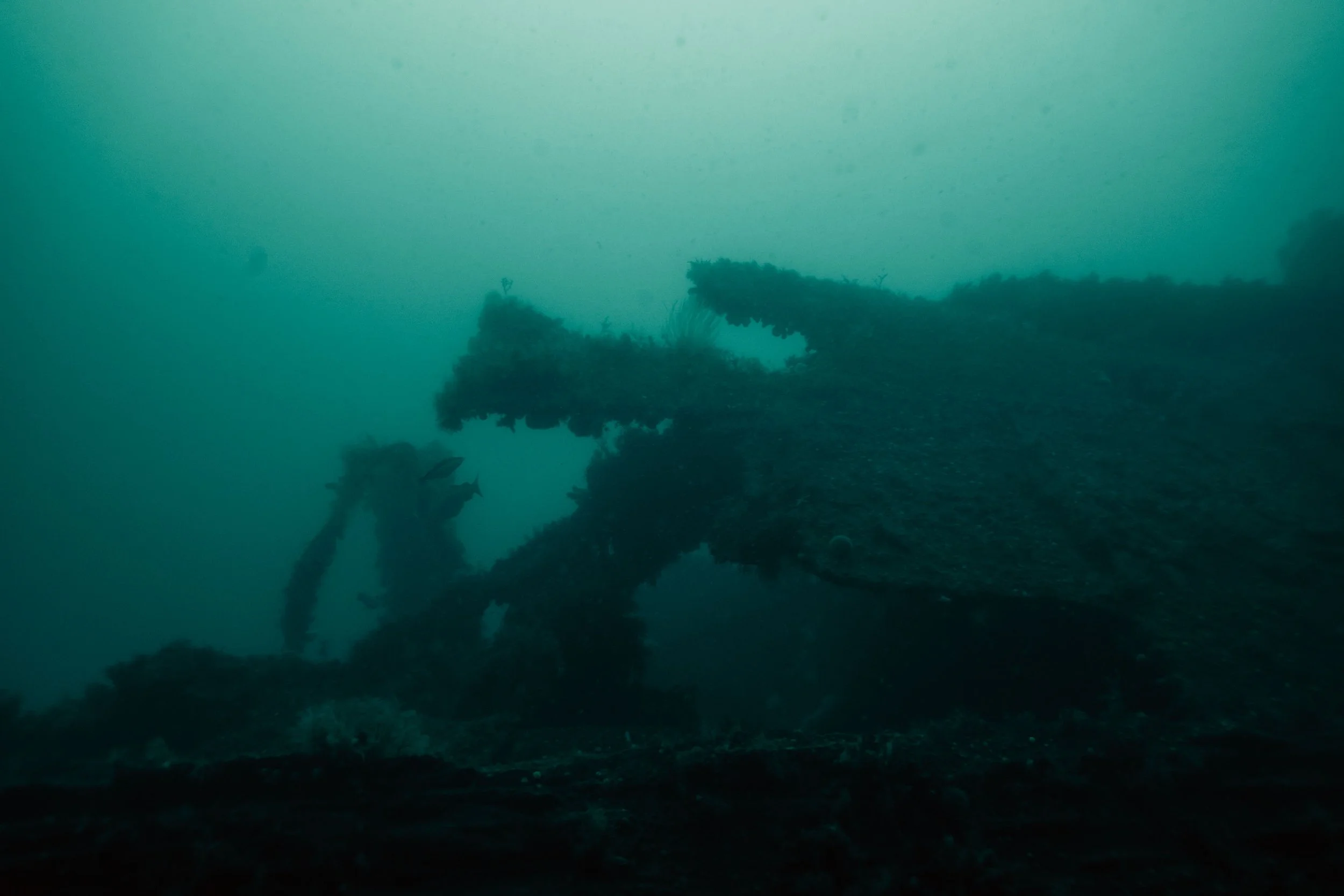
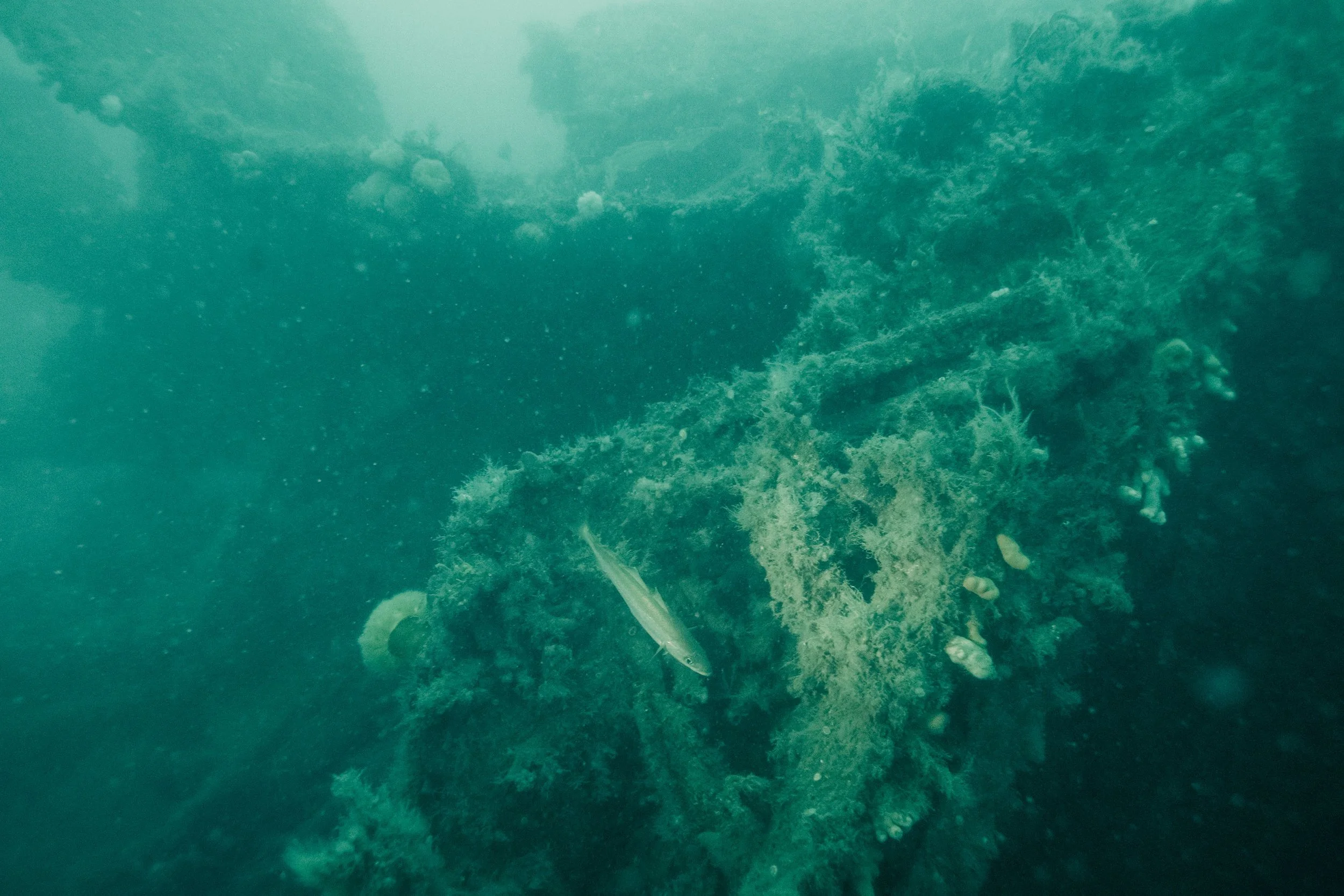
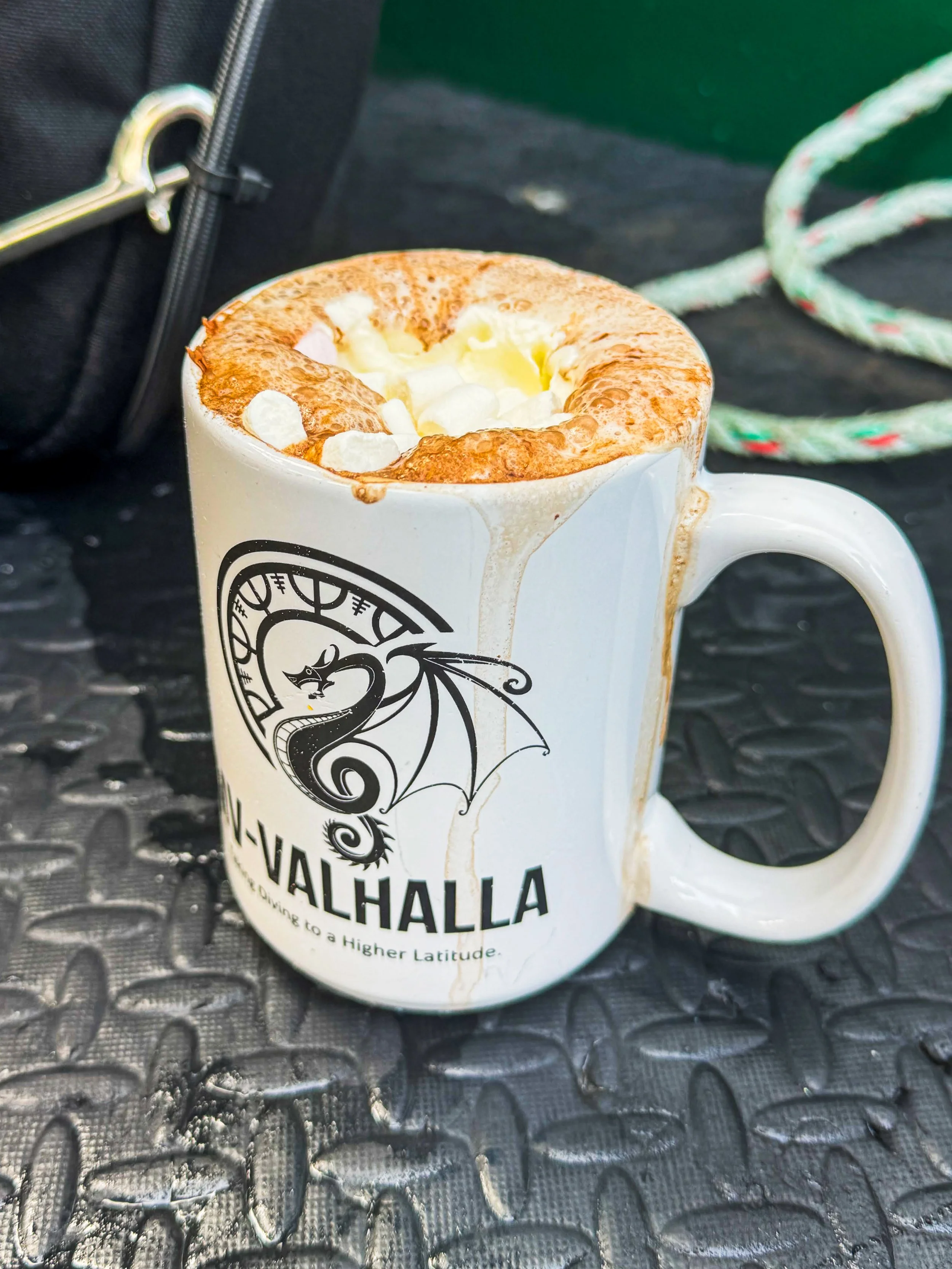
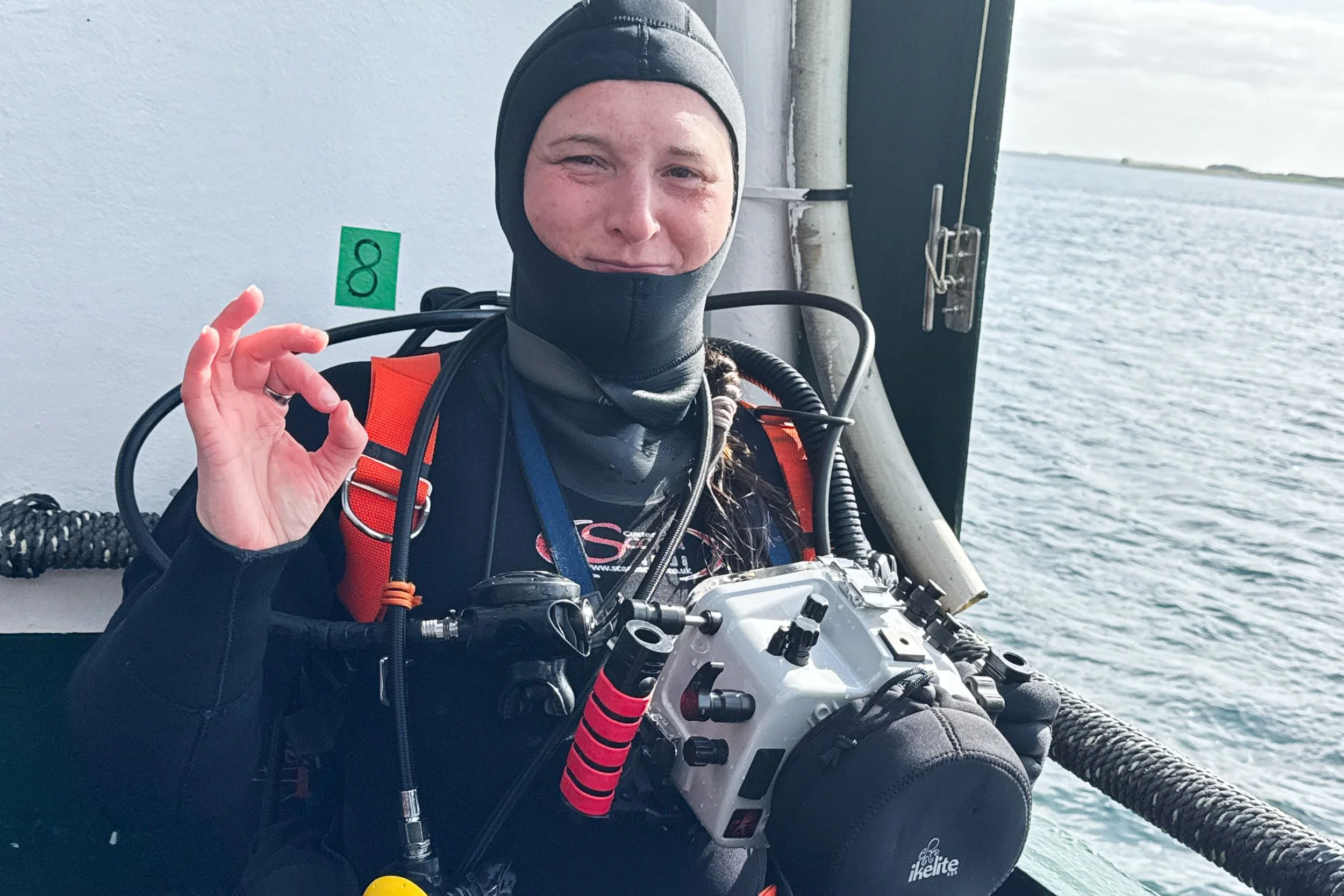
Once back on the surface, I got to enjoy the Valhalla's wonderful diving lift. All you had to do was to step, still in the water, onto a platform lowered against the side of the boat, and the lift simply raised you up so you could step straight onto the deck. A brilliant invention, given that your gear alone weighs several dozen kilos. I had barely sat down on the bench when a steaming cup of hot chocolate arrived from the galley, topped with whipped cream, marshmallows and sprinkles. A delicious way to end a dive!