Tomb of the Dogs
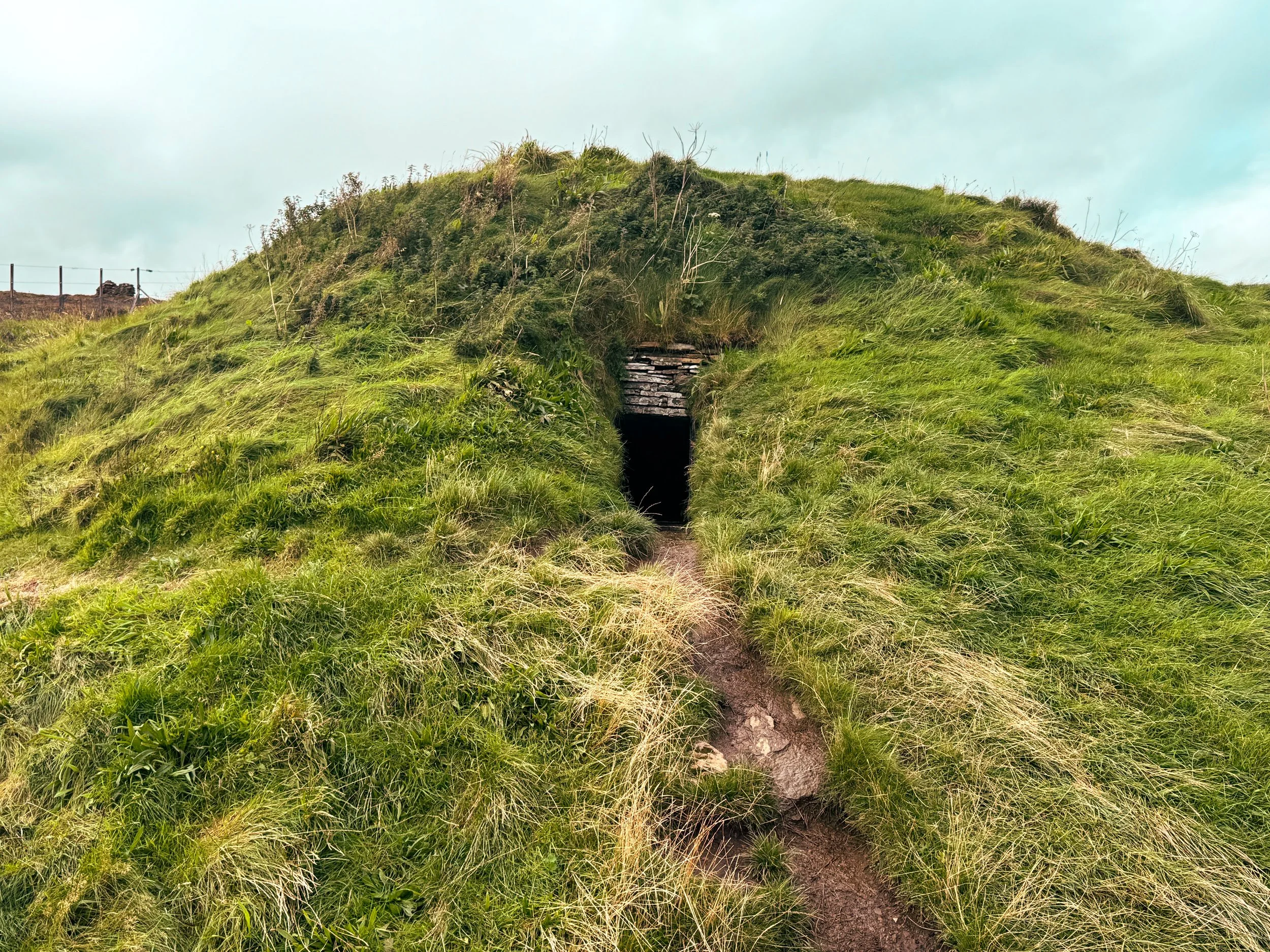
Cuween Hill rises above Finstown as a gentle slope. On the hillside, placed so that the view opens out over the Bay of Firth, sits one of Orkney’s somewhat smaller but at the same time most atmospheric chambered tombs, or cairns. I visited it in October, on a slightly overcast but dry day. We left the car in a small car park and walked up a fairly steep path to a low, grassy mound on the slope, with a small, square entrance in its side.
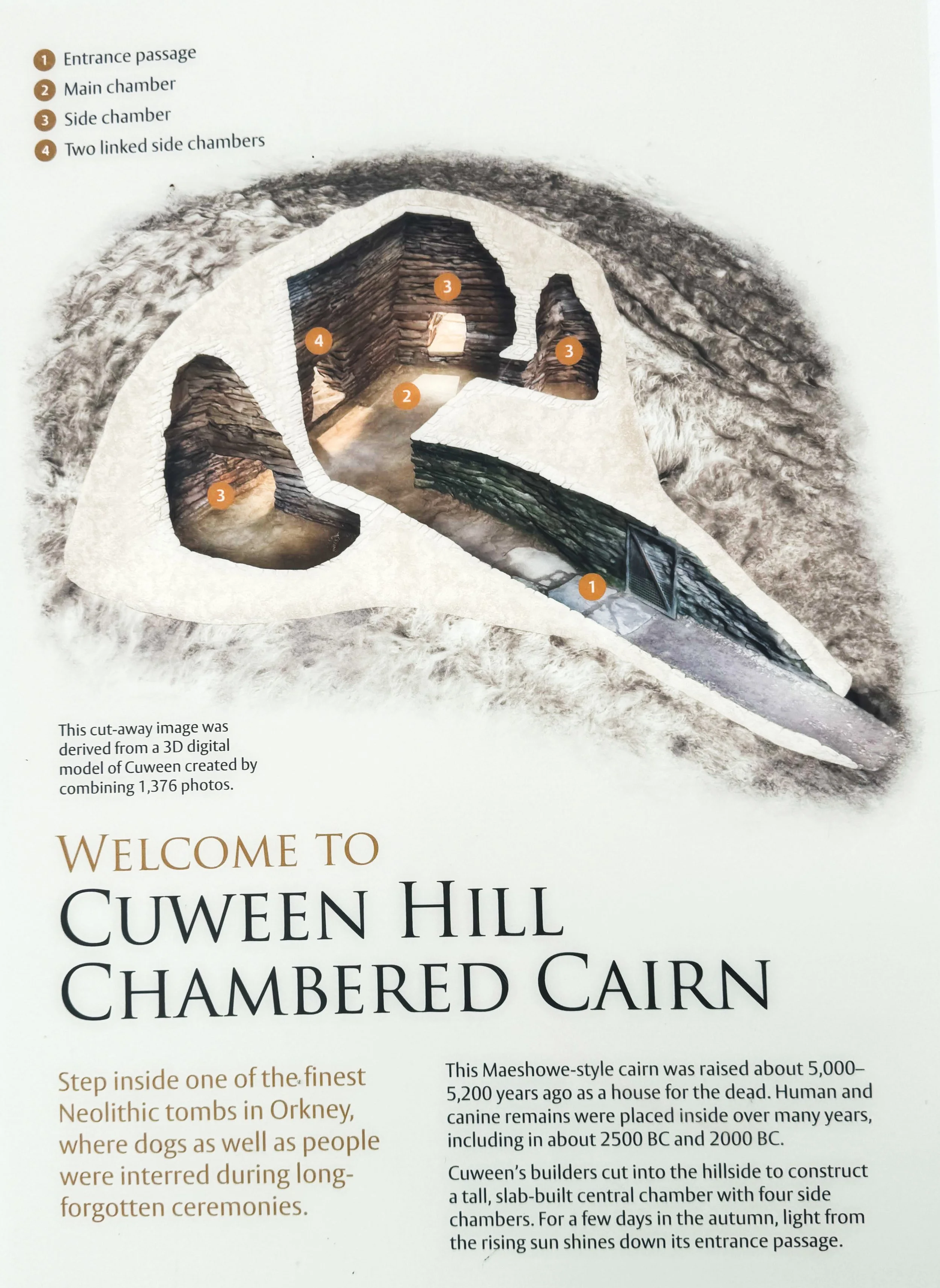
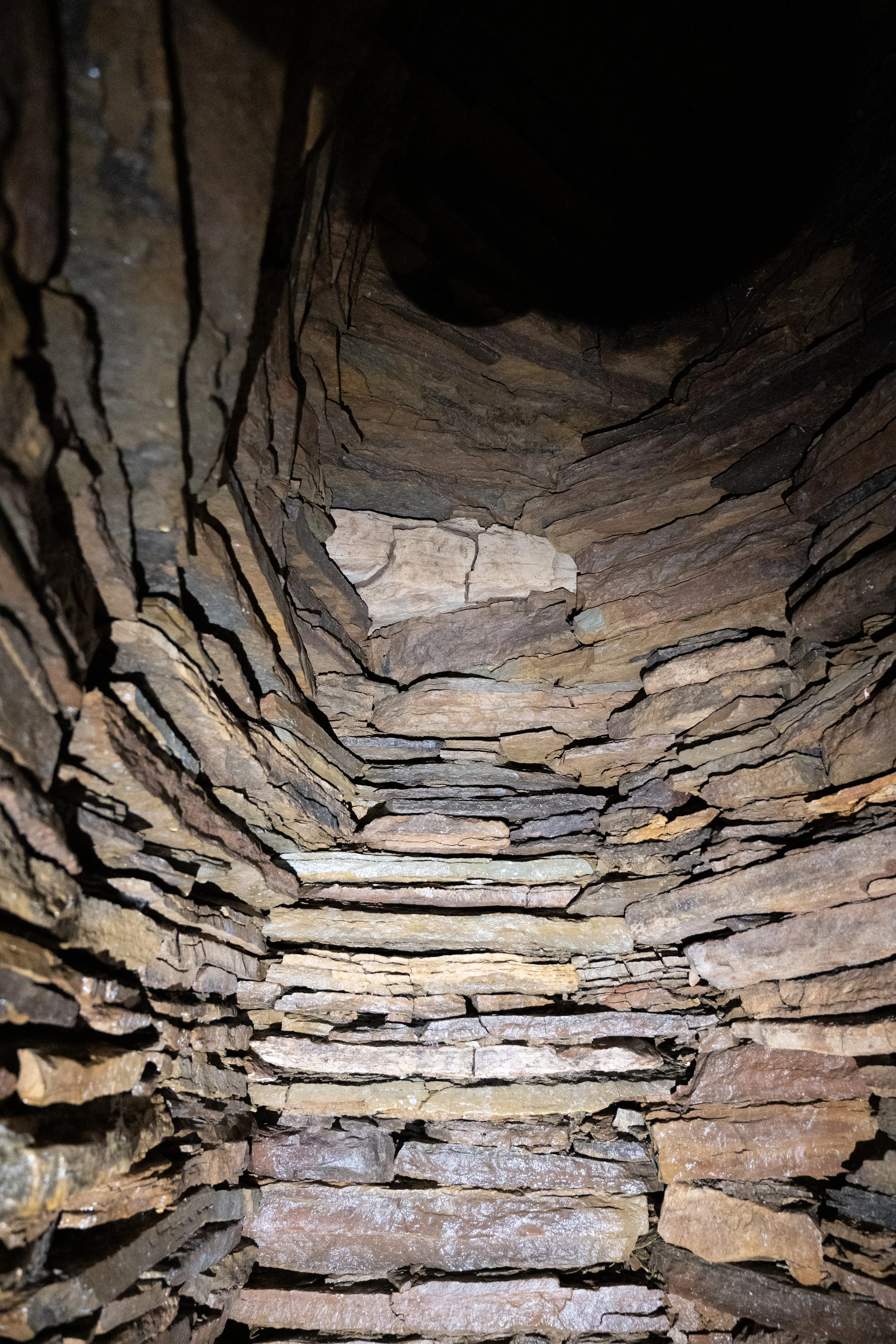
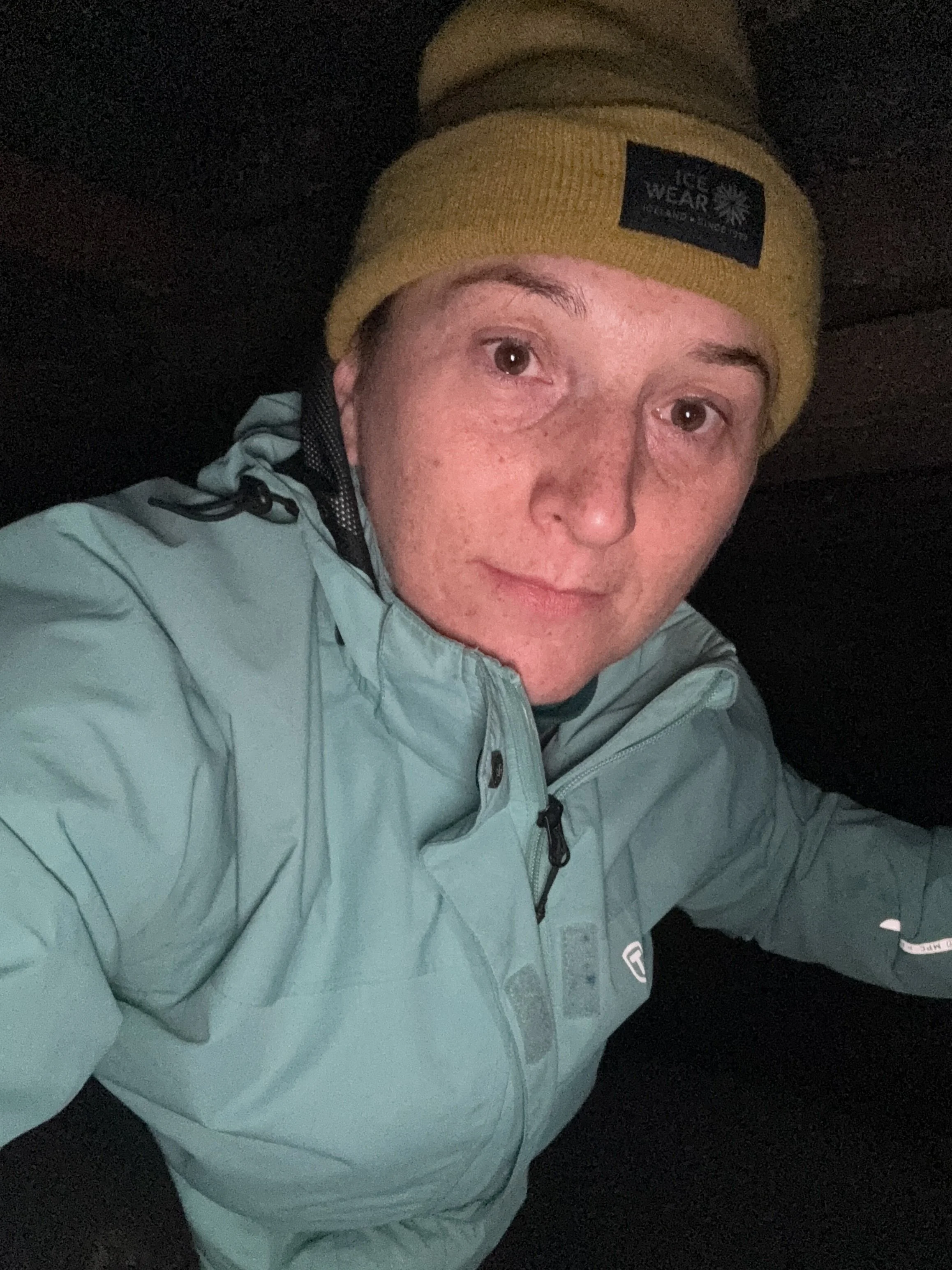
This time we didn’t go in on a wheeled board as at Isbister, but the traditional way: on all fours. The passage is so low that you have to crawl through on your hands and knees, holding up the camera hanging from your neck. In the central chamber, however, there was room to stand. There was little light, so some kind of lamp is essential. The tomb was quiet and smelled damp; the floor glistened wet and was muddy along the edges. The main chamber’s roof is now a concrete dome, but the walls are original. The flat stone slabs have been laid course upon course and narrowed towards the top so skilfully that they have stood for five thousand years. Four smaller side cells open off the central chamber, and the roof of one of them is probably still original. The structure is of the same type as the famous Maeshowe, only on a smaller scale.
The tomb was built around 3000–2400 BC. When it was excavated in 1901, it held the remains of only eight people but as many as 24 dog skulls. The dogs had been brought into the tomb centuries after it was built, and no one knows for certain why. It has been suggested that the dog may have been the emblem animal of the community living around the tomb, a kind of totem, somewhat as the sea eagles perhaps were at Isbister. In 2019 a facial reconstruction was made from one of the skulls, revealing a still slightly wolf-like dog about the size of a large collie. Sadly, some of the excavated finds have been lost over the years.
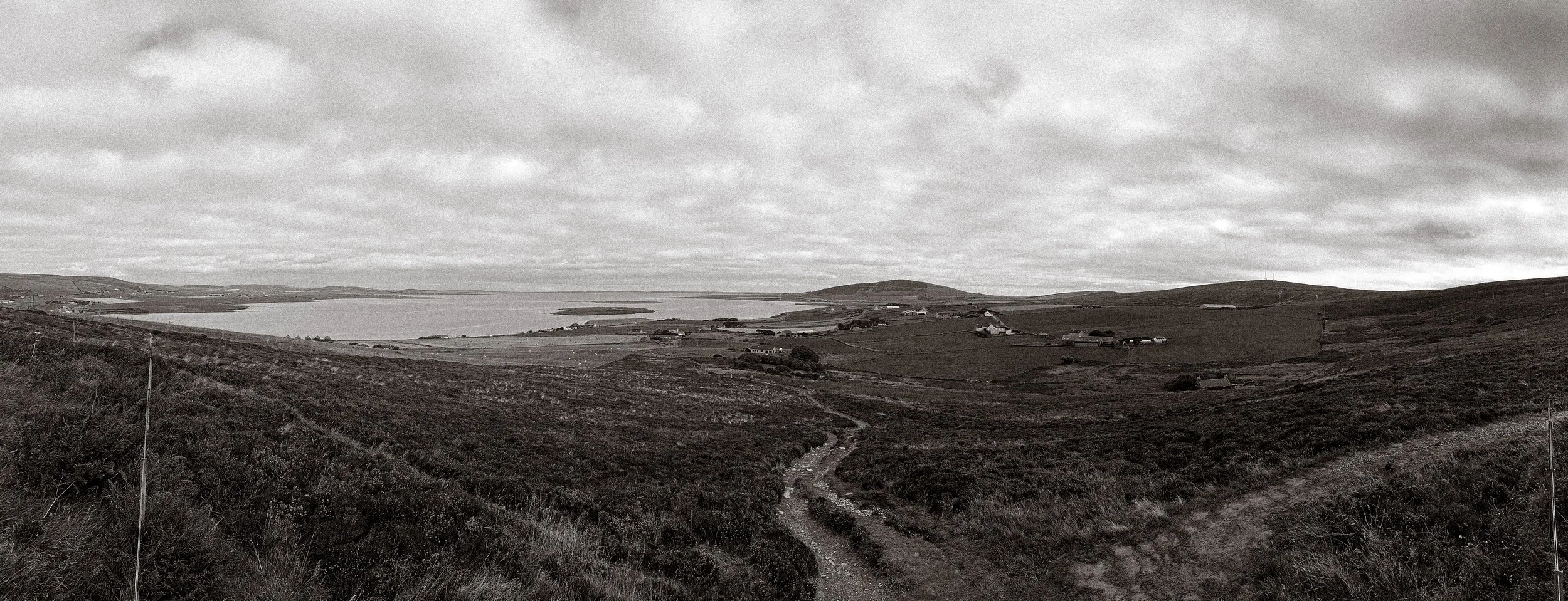
View from the tomb entrance over the bay.
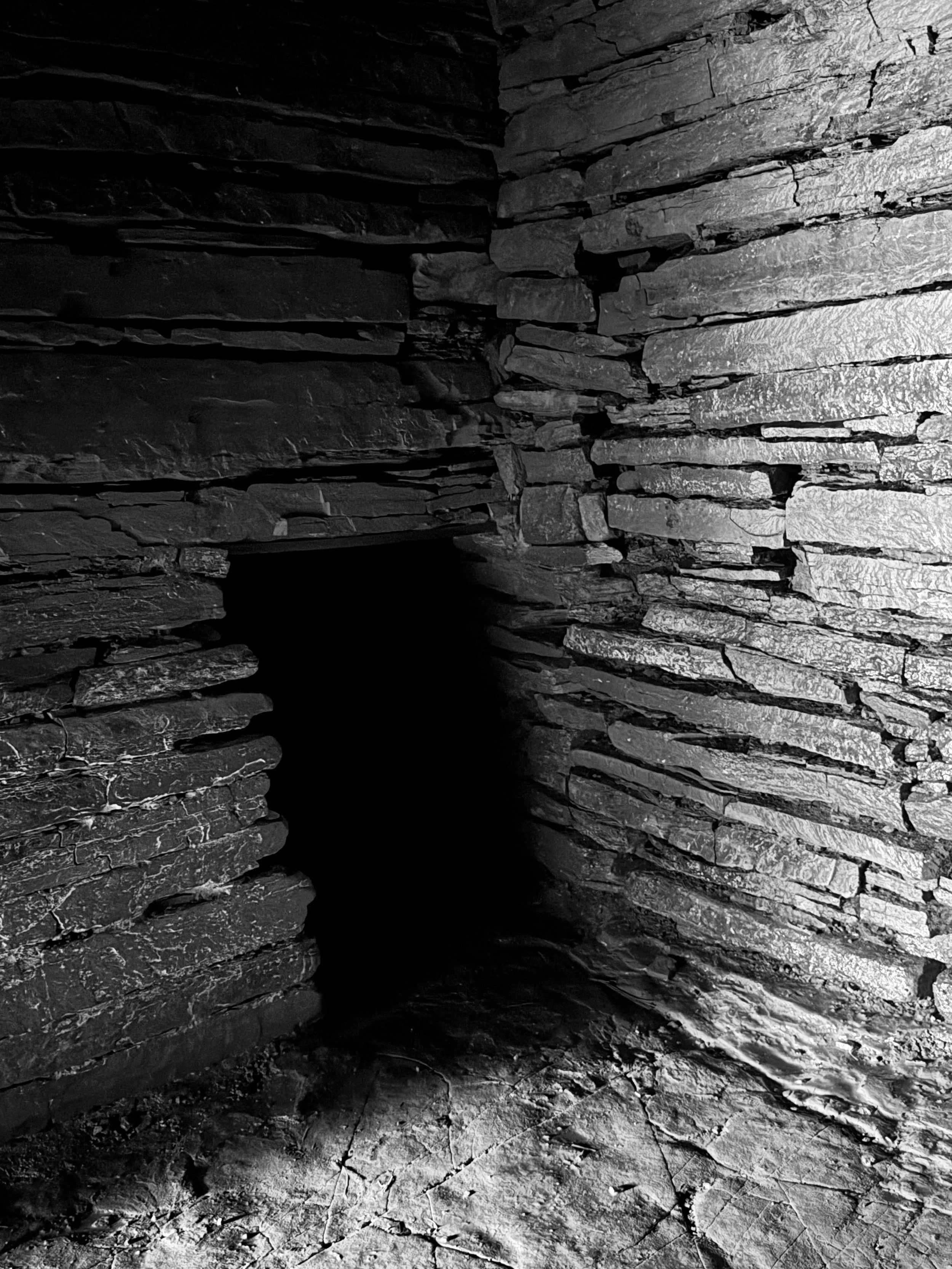
Photographing at Cuween was different from Isbister. I tried to take pictures both with an artificial light source and with long exposures without one. I set my Rollei on the step of a smaller cell and photographed diagonally past the passage leading out, towards the wall and the opening of a side cell. The floor was full of cracks which, in the pale side light, looked almost like deliberately drawn triangular marks. Some tombs do have geometric marks incised into the stone that show up in raking light, but these are probably just cracks.
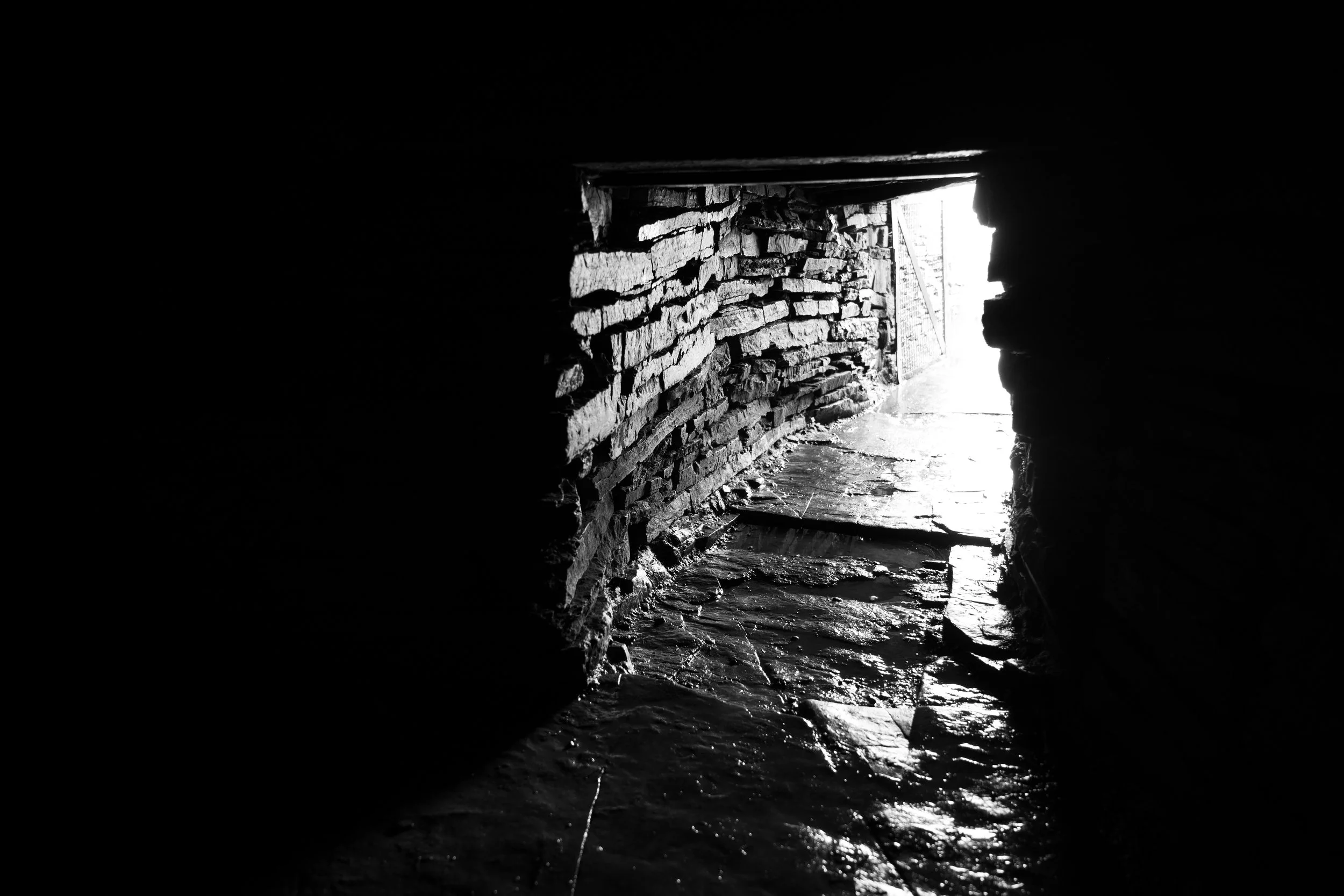
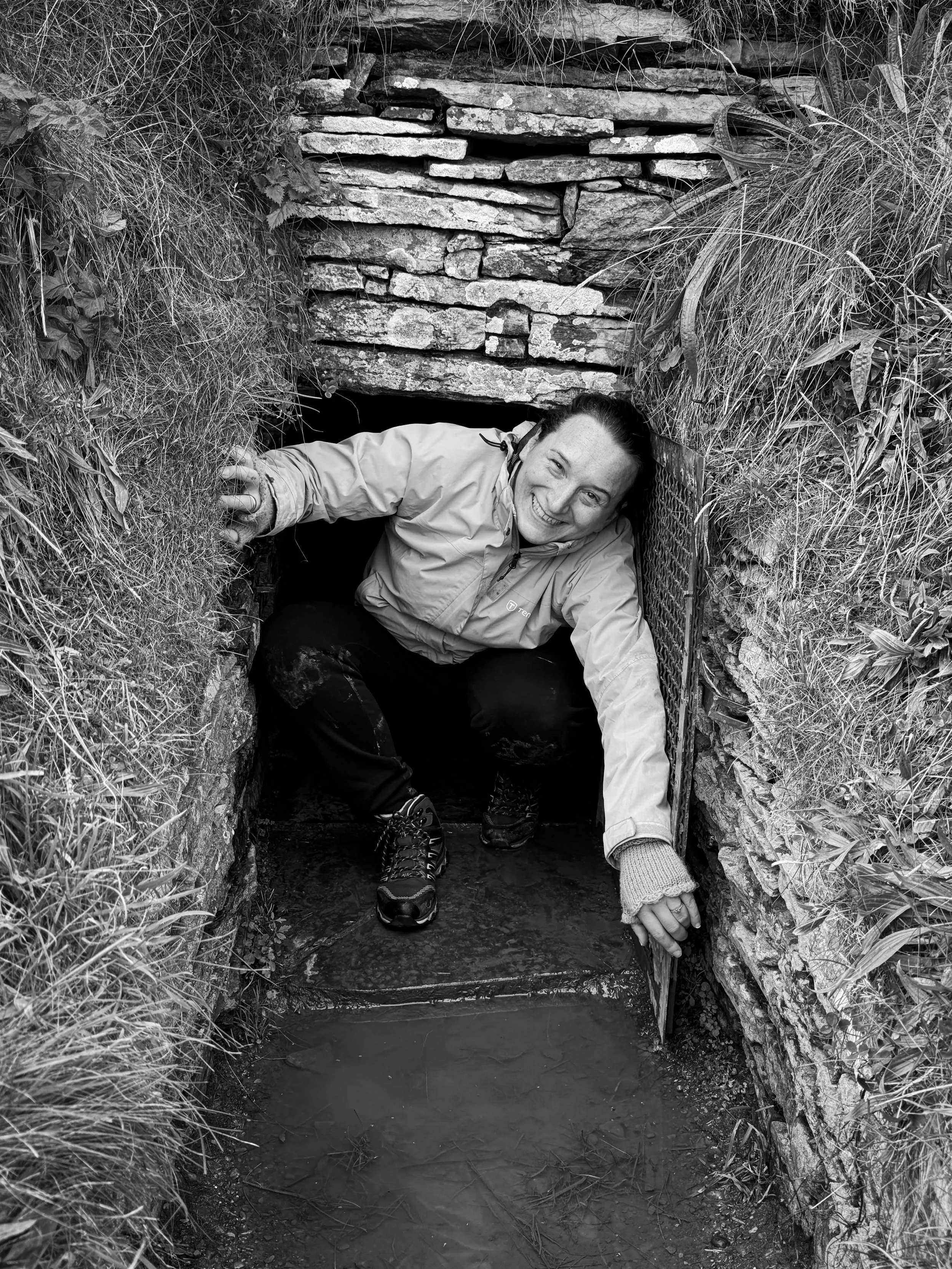
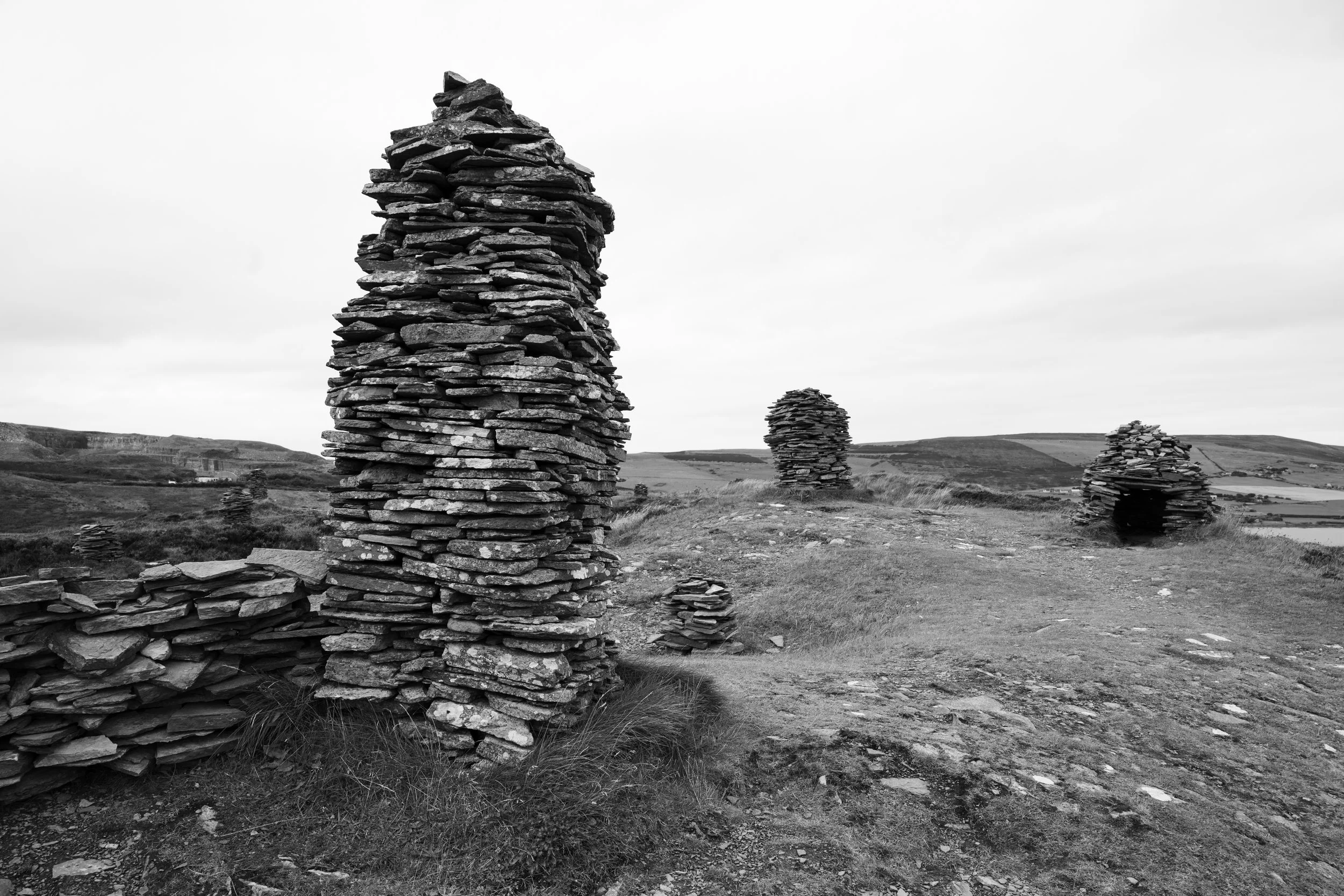
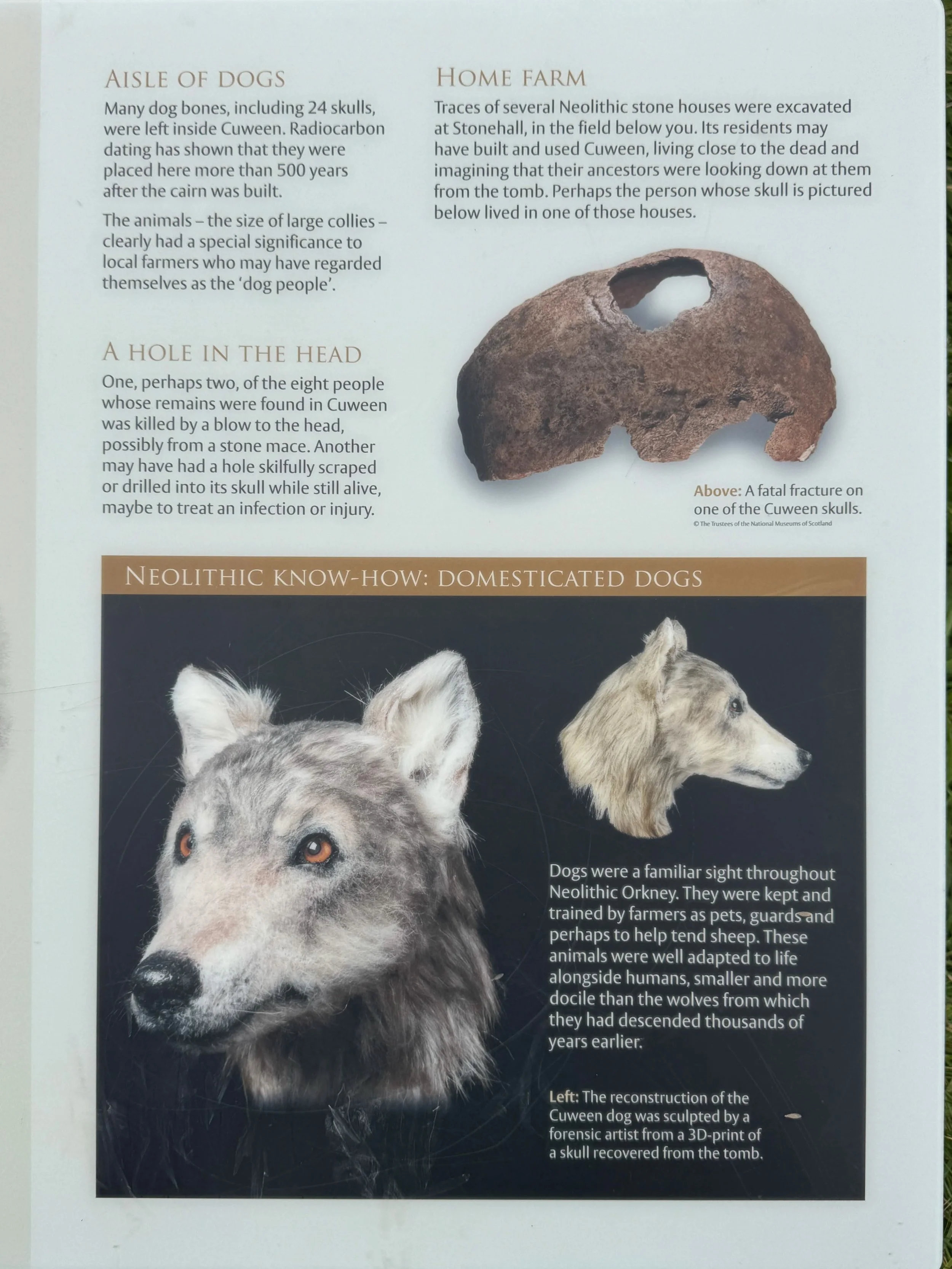
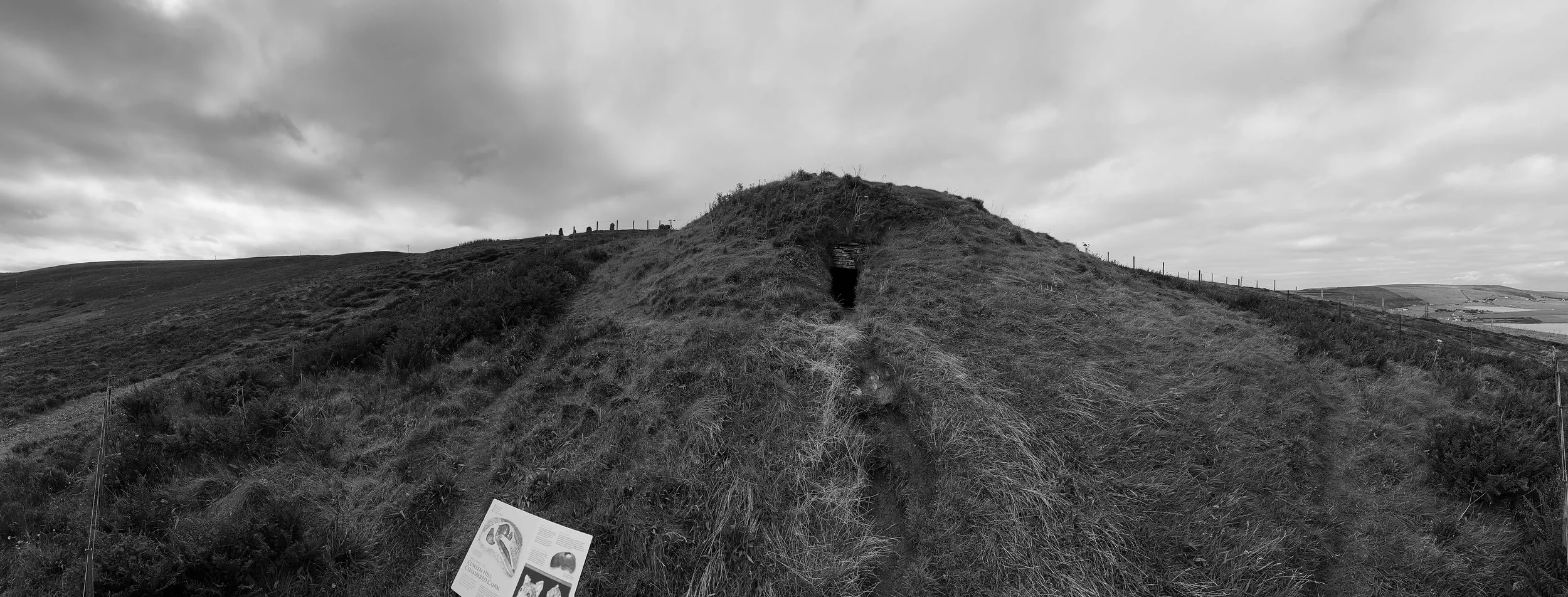
Looking out through the entrance, the landscape is framed into a clear picture of the Bay of Firth, in Old Norse Aurriðafjǫrðr, the Trout Firth, and two small islands. As you crawl out of the tomb, the landscape opens up magnificently before you. Piles of stones of unknown origin have later been built on top of the hill. Interestingly, the tomb itself is not on the summit but specifically on the slope. The remains of a small Neolithic settlement have been excavated at the foot of the hill, so people probably carried their dead up above their homes. Did the dead keep watch over the living from there and look after the community?